

How Much Is My Car Worth?

Not sure how much your car is worth? HPI’s guide explains the key factors that determine a used car’s value and how to generate an accurate valuation. ‘What’s my car worth?’ is the age-old question – and it’s usually followed by someone puffing air out of their cheeks and humming. A proper car valuation draws on lots of different factors, and unless you’re a motor trade veteran, it’s difficult to know exactly what your car is worth. The good news is that calculating an accurate valuation does not require decades of experience on dealer forecourts, because the same fundamental rules about valuation apply to all used cars. The only exceptions are rare or classic models, which require specialist expertise. HPI’s guide explains the dynamics that determine valuations and how sellers can calculate an accurate figure. What factors determine a used car’s value? Condition This is the number one element in a used car valuation. If you put two identical cars side-by-side, one immaculate and the other needing work, the former is obviously worth more. Condition works on a sliding scale, and smaller defects such as minor scuffs or stone chips generally have little effect on a car’s value, while a major fault takes a chunk off the price. Cars are emotional purchases, and it’s easy to convince ourselves that ours is better or worth more than the market dictates, but objectivity is the best policy. The more realistic you are about the car and any defects it may or may not have, the more accurate your valuation. Paperwork Call it paperwork, provenance or service history – it amounts to the same thing. A used car with a full-service history – including evidence of any repairs or maintenance work that fell outside the regular servicing schedule – is worth significantly more than one without it. As with condition, it’s a sliding scale. One or two missing service stamps might blunt the value a little, while no paperwork whatsoever takes a big bite out of the price. Gathering all the car’s documents before you work out its value, let alone advertise it for sale, is worth it, as knowing exactly what you do and don’t have will help with both. Some newer cars have digital service histories, so contact the manufacturer for evidence of these before you get stuck in. Age and mileage It’s an obvious one, but a newer car with fewer miles on the clock is worth more than an older, well-used equivalent. Age and mileage also work on a sliding scale, but the biggest impact comes at the beginning. Cars lose most of their value early in their life, typically within the first three years. This process is known as depreciation. For conventional used cars, the value continues to fall after the first three years, but the rate of depreciation slows over time. That loss is also increased or lessened by higher and lower mileage. All the gear Buyers expect a used car to come with everything it had when it was new – and that includes anything removable. At best, a missing spare key, parcel shelf or locking wheel nut key is an inconvenience. At worst, it’s a bill for the hundreds of pounds. Missing charging cables for electric vehicles are even worse because they’re a much more urgent purchase and can come with a four-figure bill. As with the service history, these items don’t add to a used car’s value, but their absence will detract from it. Cleanliness This is arguably the simplest of the lot, and it’s best to look at it from the buyer’s perspective. Which of the following would you pay more for? Again, a clean car doesn’t add value, but a dirty one won’t make as much money. Ask yourself what you’d expect – and pay more for – as a buyer, and apply the same criteria. How to value your car Ask the experts The hpi website’s free valuation tool is the fastest and most scientific way to value your car. Log onto www.hpi.co.uk, enter your vehicle’s registration number, and punch in your contact details and the site will calculate a highly accurate valuation based on an award-winning used car valuation database. The site will give you three different valuations. The private sale value is how much you can realistically expect if you sell the car yourself, the trade-in price is what you can expect a dealer to pay for it (this is always the lowest figure because dealers build in a profit margin) and the forecourt or retail price (always the highest for the same reasons) is how much a dealer will typically charge when they sell the car. Used car buyers can also use the site to perform an instant hpi check. This is a paid service (checks start at £9.99) that tells a buyer if there is anything in the car’s history of concern. The checks cover a wide range of areas, including whether a vehicle has been stolen, written off, clocked (when the mileage has been tampered with) and if it has outstanding finance. Check out the classifieds This is the low-tech way of valuing your car, but it’s still worth a look, even when you have an official valuation. Search online for used cars advertised for sale that are as close to yours in terms of age, mileage, condition, make and model as possible. It’s unlikely you’ll find an exact match, but it should give you a reasonable idea of how much your car is worth. Bear in mind the key elements from the hpi valuation: cars advertised by dealers are generally more expensive than those from private sellers. This is not only because dealers sell cars professionally and for a profit, but also because they often provide additional aftersales cover, such as warranties, whereas private buyers don’t. Again, the dealer’s trade-in value will be the lowest of all, but it’s also the fastest and most convenient way of selling a car.
Convertibles, coupé-cabriolets and supercars that hold their value
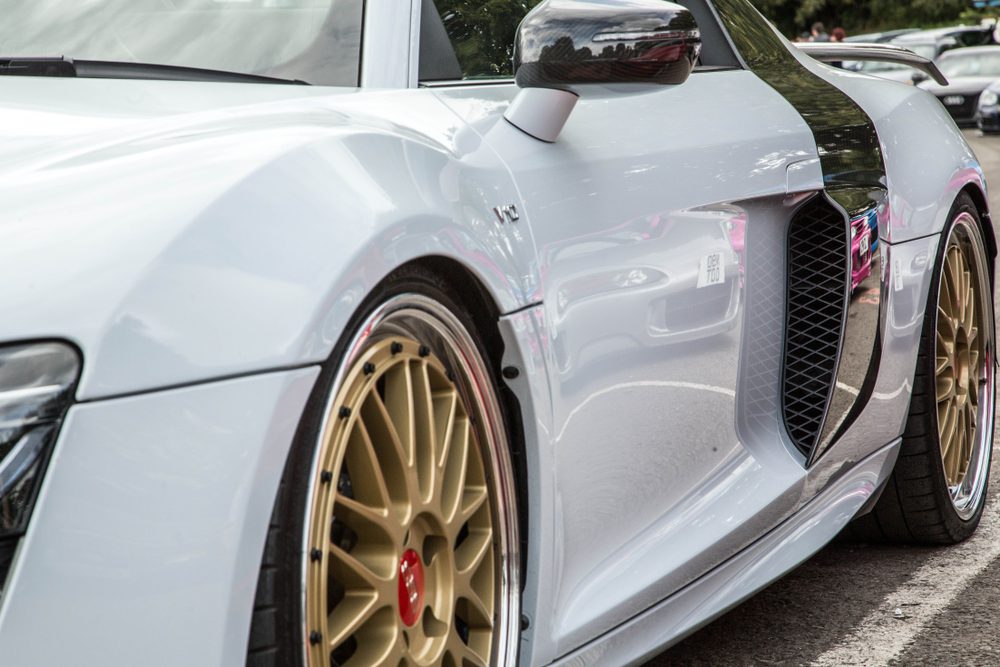
In a recent blog we introduced our latest tool which allows you to discover how well (or otherwise) just about any mainstream car retains its value. You can discover what a new car will be worth in three years as well as how much the cars of 2016 will be worth when they reach six years of age in 2022. In that last article we looked at some of the key players within the city car, supermini and small family hatchback segments. Those are the cars that sell in big numbers, but what about some of the more aspirational cars? How do the models that sell in smaller numbers fare, when it comes to losing or retaining value? Convertibles With summer about to hit, we’re going to look at what in theory is one of the most seasonal segments of all – the convertible. Despite the UK’s frequently inclement weather, we buy a lot of open-topped cars; in fact we buy more of them than any other European country. Whereas convertibles used to be noisy and leaky so you had to be an enthusiast to own one, when the roof is up on a modern drop-top it can be as refined and comfortable as a saloon. As a result, year-round use is perfectly possible, which is why values are less seasonal than they used to be. For new cars, at the top of our retained value table is the latest Porsche 911. Incredibly, 19 of the top 20 places are taken by Porsches, with the outgoing and incoming 911s dominating things – although the 718 Boxster also appears several times. The sole top 20 place that isn’t taken by a Porsche is taken by the Bentley Continental GTC in 6.0-litre W12 form. That’s a car that is expected to retain 56.9% of its value, whereas the Fiat 500C at the bottom of the table will be worth just 30.8% of its new list price after three years. However, while the Fiat will shed around £10,000 in that time, the Bentley will go down in value by £70,000 or so. It’s a similar picture where the convertibles of 2016 are concerned; by the time these reach their sixth birthday in 2022 it’s the Porsche 911 and Boxster which will have held their value the best. Again, 19 of the top 20 cars are Porsches with only the Range Rover Evoque 2.0 Si4 HSE Dynamic breaking up the party with an appearance at number 12. At the top of the pile is the limited edition Boxster Spyder which is expected to hold on to 38.7% of its value; at the bottom of the table this compares with the Vauxhall Cascada 2.0 CDTi Elite which is pegged at just 14.4%. The Cascada’s showing reflects how important an aspirational brand is to buyers; we would all prefer to own a car that’s seen as premium rather than mass-market. As a result, eight of the 10 bottom places are taken up by the Vauxhall Cascada, Citroen DS3 or the DS 3. What may be more of a surprise is that the other two slots are taken by the BMW 6 Series convertible in 640d form. Although coming from a premium brand, the 6 Series perhaps never gained the following that BMW wanted, and is no longer in production. However this BMW will be surprisingly affordable in 2022; in 640d SE form we expect it to be worth just 14.6% of its new list price when six years old. Coupé-cabriolets We separate coupé-cabriolets from convertibles with a cloth roof, and what’s interesting is how few drop-tops are now available with a folding hard top. There was a time when convertibles were all going this way, but now there’s just the two-seater Mercedes SLC and the four-seater BMW 4 Series – and the former is about to go out of production. By the end of the summer the only coupé-cabriolet on sale in the UK will be the BMW 4 Series. We expect the Mercedes to hold on to more of its value than the BMW (41.1-44.0% compared with 28.6-35.2%) and if we look at the 2016 coupé-cabriolets the situation is mirrored there, with the Mercedes (which was then called the SLK) and the 4 Series both dominating the top of the table. The only other contender is the Renault Megane, which unsurprisingly trails the two Germans thanks to its lack of a premium badge. Supercars Supercars are generally the most expensive and exclusive cars you can buy; the only models that can compete are ultra-luxury saloons from the likes of Rolls-Royce. As a result, while the Ferrari 488GTB retains more of its new list price than any of its rivals, with a forecast residual value of 64.5% it will still shed over £70,000 within three years. Throughout our supercars table Ferrari is up against Aston Martin and Lamborghini, with the Audi R8 bringing up the rear. It’s interesting that the Audi trails its more prestigious rivals by quite so much; the 5.2 V10 coupé will retain as little as 37.5% of its value whereas the lowest-performing Lamborghini is pegged at 47.7%, while the lowest-performing Aston Martin is rated at 52%. On the Audi’s part it’s certainly not because of any lack of ability as this is one of the best driver’s cars out there – it’s all down to the badge not being as aspirational as those of its rivals. Looking at the supercars of 2016, and what they’ll be worth in 2022, once again it’s Ferrari that leads the table with the top seven places. Lamborghini takes the next seven slots with various iterations of the Aventador and Huracan, with the Audi R8 taking places 15-19. Perhaps the most interesting thing about taking this longer-term view is how much more mixed up things are. Things are very polarised within those first three years, but by the time these supercars have reached their sixth birthday, some versions of the Audi R8 hold on to their
The value of a service history
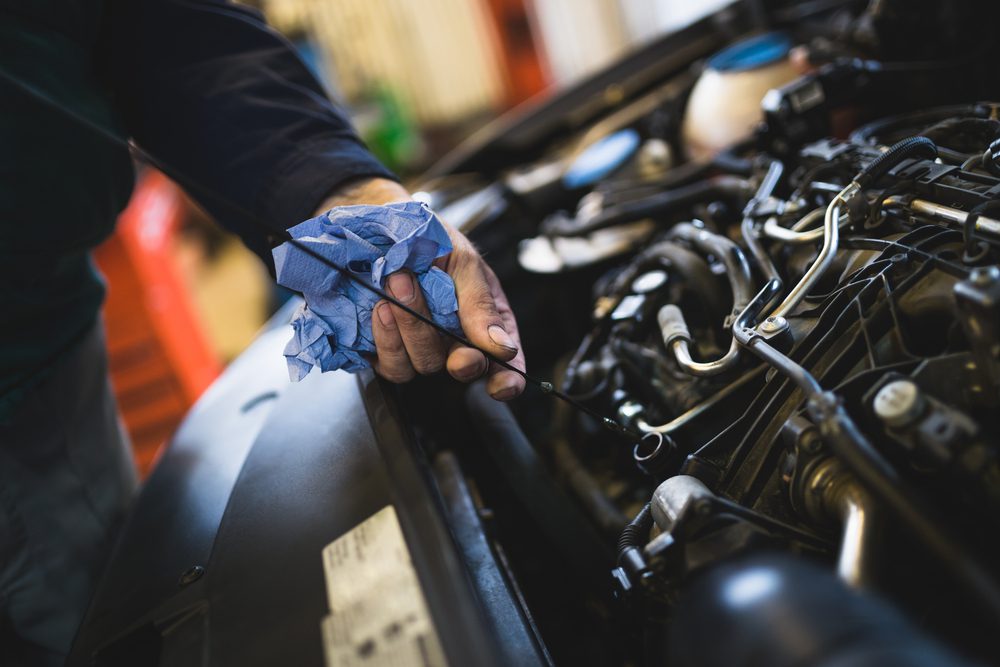
How important is the service history when it comes to buying or selling a car. How is the car’s value affected and what kind of service history should it have?