

Car Scams under the Spotlight
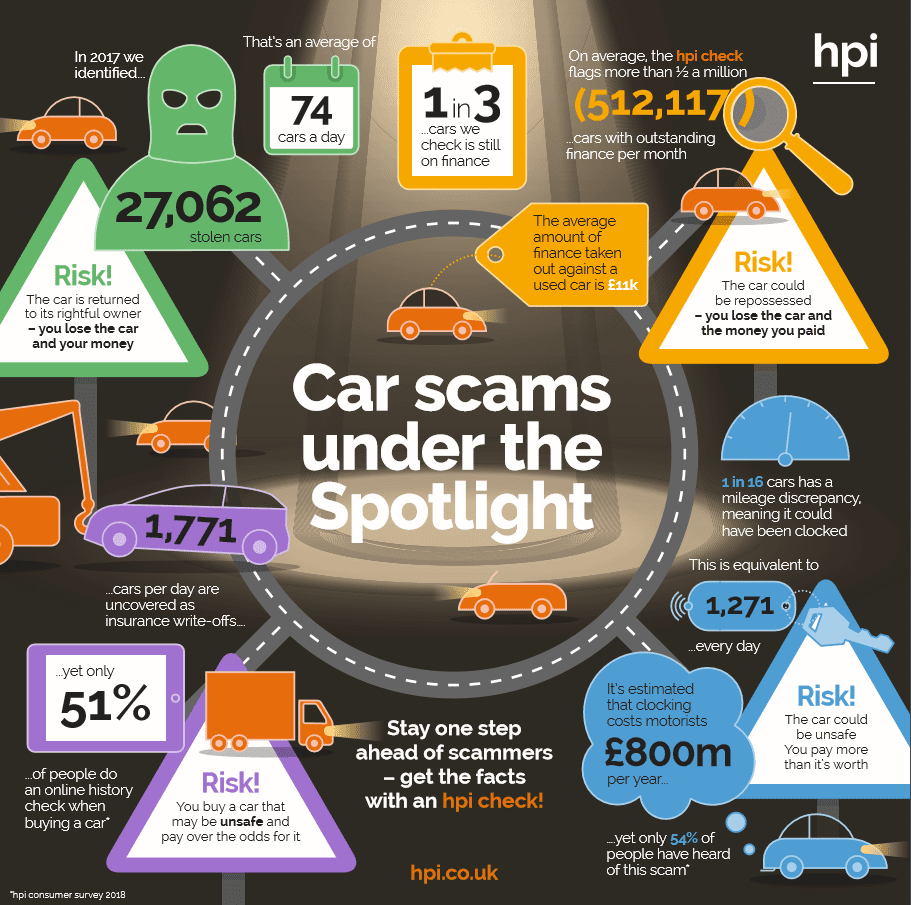
Buying a used car can be a stressful experience as it’s difficult to know a car’s history simply by looking at it. Scammers go to great lengths to pull the wool over the eyes of an unsuspecting car buyer and it’s a problem that isn’t going away any time soon. Every year we check millions of cars looking for signs of motor fraud – the statistics are shocking and the risks are very real. Take a look at the numbers below as we shine a light on car scams and motor fraud. If you’re worried about the history of a car, check it NOW using our tool below. [hpicheck]
Vehicle Depreciation: Petrol or Diesel
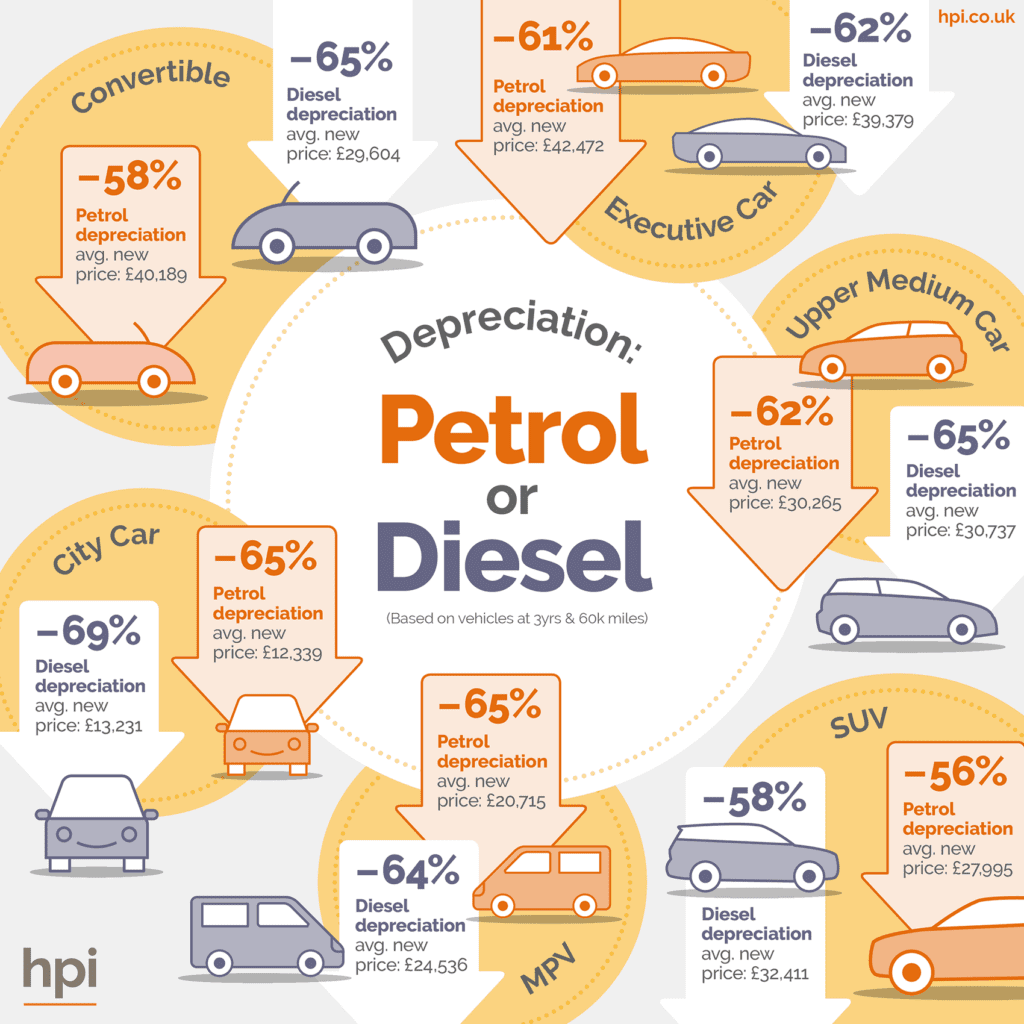
With so many factors to consider, there’s no right or wrong answer when deciding whether to buy a petrol or diesel car. Much will depend on your planned usage and whether the car meets your needs. Understanding how well a vehicle holds its value is an important factor for many car buyers, particularly in the first 3 years. With that in mind, we’ve compiled a market analysis across various car types so you can compare petrol and diesel side by side and hopefully make a more informed car buying decision. Petrol or diesel? You decide… Use our free valuation tool to find out the current and future value the car you’re looking to buy: [iframe src=”https://hpivaluations.com/i/hpiblog/start” width=”360px” height=”370px” class=’aligncenter’ style=”margin:10px auto; height:370px”]
The new driving test

On 4 December an overhauled driving test was introduced across the UK – and it was met with strikes by examiners who reckoned the changes were not a step in the right direction. Compared with the previous test, the Driver and Vehicle Standards Agency (DVSA) which oversees the test introduced four key changes:
Common Road Signs: How Much Do UK Drivers Know?

If you cast your mind back to when you were first learning to drive, you might have panicky memories of trying to frantically learn all the road signs to make sure you didn’t mess up on your test. If this sounds familiar, it’s also probably fair to say that as soon as you passed your test you perhaps relaxed your dedication to knowing every single road sign off by heart. This then got the team at HPI wondering just how much we Brits do know when it comes to the road signs we encounter every day when behind the wheel. So, we set to work to find out and here’s how we did it: The Research We tasked a number of UK drivers that had different ages and driving histories with several tests. The first of which was to see how well they could draw the following road signs: No entry Stop No overtaking Roundabout End of a motorway Give way National Speed Limit One-way system The next test saw us give our drivers a selection of images of road signs that they had to identify. These were the signs we included: Sharp bend Double bend No waiting / Controlled Zone Uneven road Congestion The final tests we carried out saw us asking the drivers a few bonus questions around what UK speed limits can apply for certain traffic signs without numbers, or driving when on certain types of roadways. A Variety of Results Once we’d gathered all our data, we then studied our findings and learned that we’re quite hit and miss when it comes to knowing our signs and speed limits. Here’s some key findings from our drawing test: 50% of people couldn’t draw a ‘Stop’ sign 55% of people couldn’t draw the ‘No overtaking’ sign 90% of people couldn’t draw the sign for a ‘Roundabout’, and were equally as confused by the ‘Mini-roundabout’ sign Only 15% of people could draw the ‘End of motorway’ sign 70% of people didn’t know how to draw the ‘Give way’ sign Almost half of people (45%) didn’t know how to draw the ‘One-way system’ sign In the second part of our test (the image identifying test) we found out the following: 55% of people couldn’t identify what the ‘Sharp bend’ sign was, with the majority of people mistaking it for ‘Turn right’ Only 20% of people could identify the ‘Mini-roundabout’ sign 95% of people didn’t know what the ‘No waiting’ sign was None of our drivers could tell us what the ‘Uneven road’ sign meant 35% of people couldn’t identify the sign for ‘Congestion’ The main findings from the speed limit questions we asked were as follows: 12% of those we asked thought the speed limit on a dual carriageway was 80mph – as much as 10mph over the actual limit 38% of the drivers aged between 25-34 thought the speed limit for a van on a motorway was 50mph 56% of all our drivers didn’t know the speed limit for a van on a motorway 6% of those we asked didn’t know what the speed limit is when you’re towing on a single carriageway 60% of drivers got the dual carriageway speed limit wrong 47% of these people thought the speed limit on a dual carriageway was 60mph Final Thoughts… While it’s interesting to see how much (and how little) we know, these tests were all just a bit of fun; the serious point remains that as a UK road user, you should be able to identify your traffic signs to ensure you and your passengers are safe. So, if these stats have set alarm bells ringing, it certainly wouldn’t hurt to get out the old Highway Code and brush up on your signs and symbols.
How to Spot a False Mileage
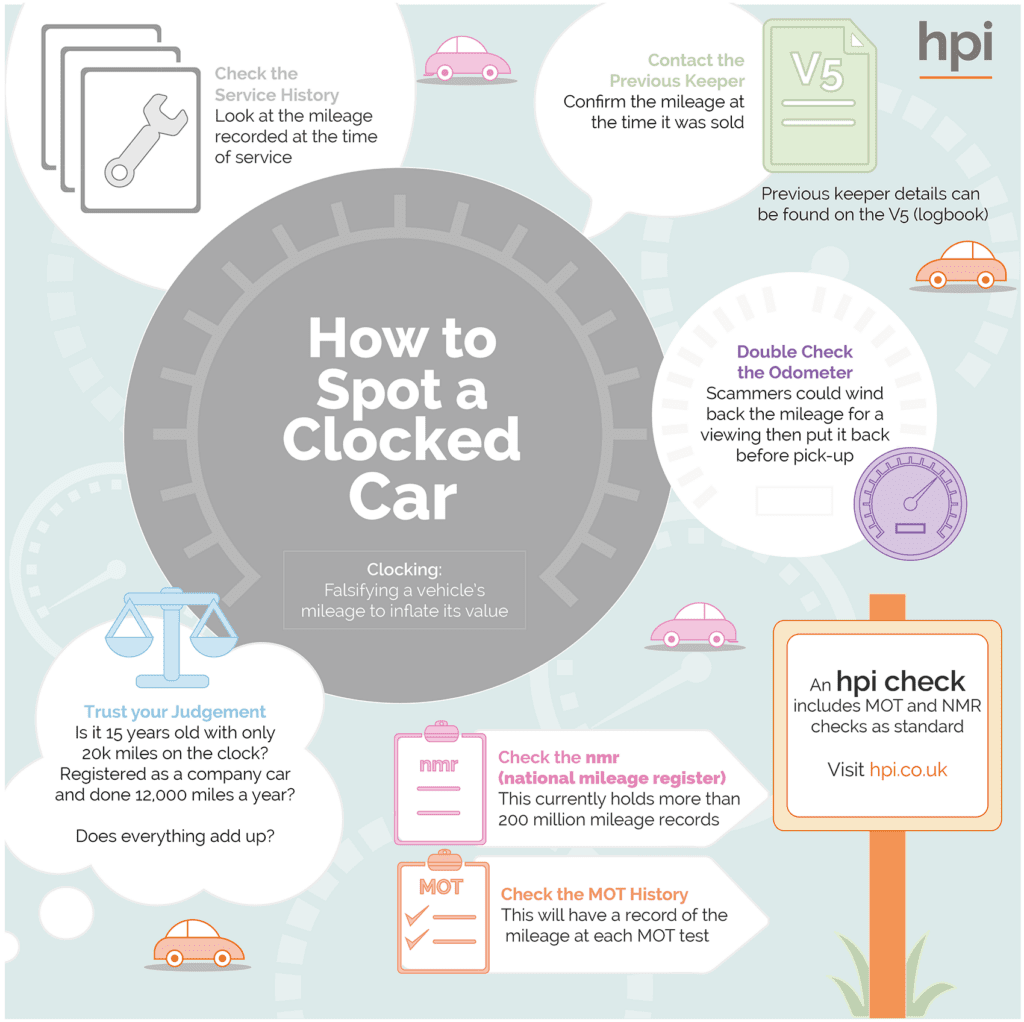
Car clocking is on the increase and scammers are exploiting loopholes in the law to scam unwitting car buyers. Being vigilant and doing a few simple checks can save you from the headache of buying a car that’s had its mileage falsified. Buying a clocked car can have both financial and safety implications so awareness is vital. Our free MOT History check will show you the mileage recorded at every MOT test, allowing you to spot any inconsistent readings or discrepancies. Stay one step ahead of scammers check now!
Diesel Car Scrappage Scheme Comparison
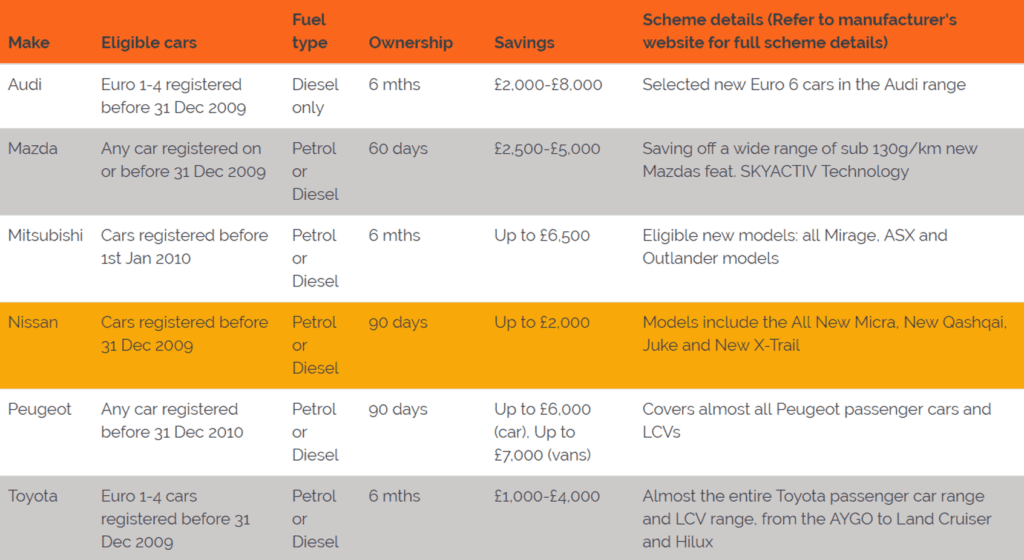
Those of you concerned about upcoming taxes and surcharges on diesel cars may be considering the diesel scrappage scheme as an option. There are various scrappage schemes available with eligibility and savings differing from one manufacturer to another. Our table below highlights some popular car scrappage deals currently available for both petrol and diesel cars. If you’re considering using a diesel scrappage scheme to trade in an older or less eco-friendly vehicle for a cleaner model you can use the table below to compare some of the deals currently on offer. [ninja_tables id=”360″] Please note: this comparison table is designed to give an ‘at a glance’ overview. Terms and conditions will vary depending on the manufacturer (too many to include here) full details of each scheme are available on the respective manufacturers’ websites. Use our free hpi emissions checker below to check the Euro emissions standard of your car. [iframe src=”https://hpicheck.com/api/euro-status” width=”300px” height=”180px” class=’aligncenter’ style=”margin:10px auto 0 auto; height:180px”] Disclaimer: This tool is intended for personal use as a guideline only. We rely on data sourced directly from our partners. However, we provide no warranty as to the accuracy of the information and accept no legal liability or responsibility for its accuracy. Older or more unusual vehicles may not be covered by this tool. If you have concerns about your vehicle’s emissions you should consult with the retailer or manufacturer for more information.
The Cost of Car Clocking – Video Explainer
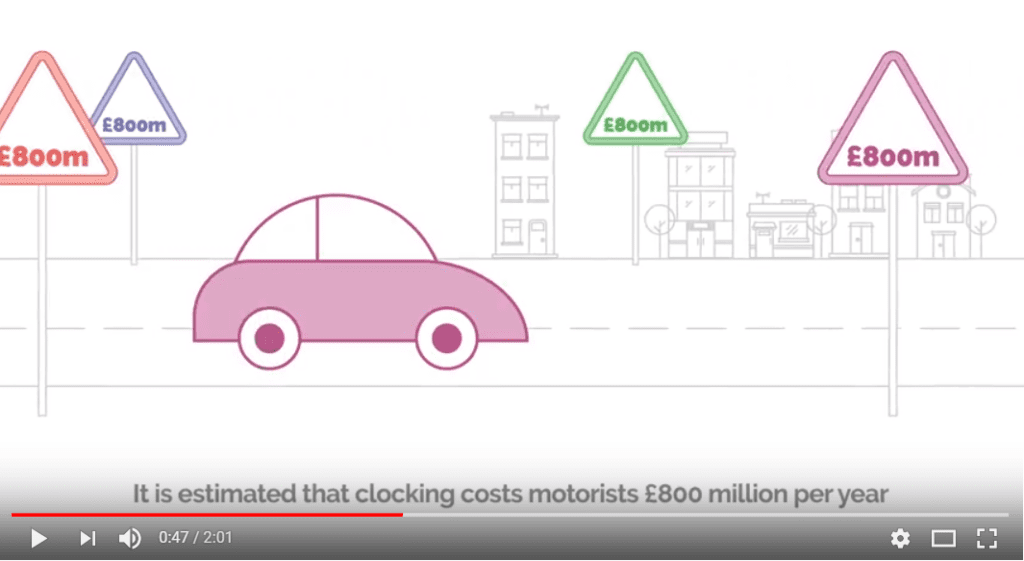
Car clocking is on the rise and it is estimated that clocking costs motorists £800 million a year! This video explains what car clocking is and how this can affect you. When buying a car it’s important to check for any indication of falsified mileage and getting a mileage check is a vital step before buying a car. Get your free MOT History check here. This will show you the mileage recorded at every MOT test, allowing you to spot any inconsistent readings or discrepancies. Stay one step ahead of scammers check now!
The True Cost of a Clocked Car
Car clocking (falsifying a car’s mileage to inflate its value) is a growing problem that not everyone is aware of. Below we share some shocking facts on the topic and explain how buying a clocked car could affect you. Our free MOT History check will show you the mileage recorded at every MOT test, allowing you to spot any abnormal or inconsistent readings. Stay one step ahead of scammers check now!
Car Clocking Explained
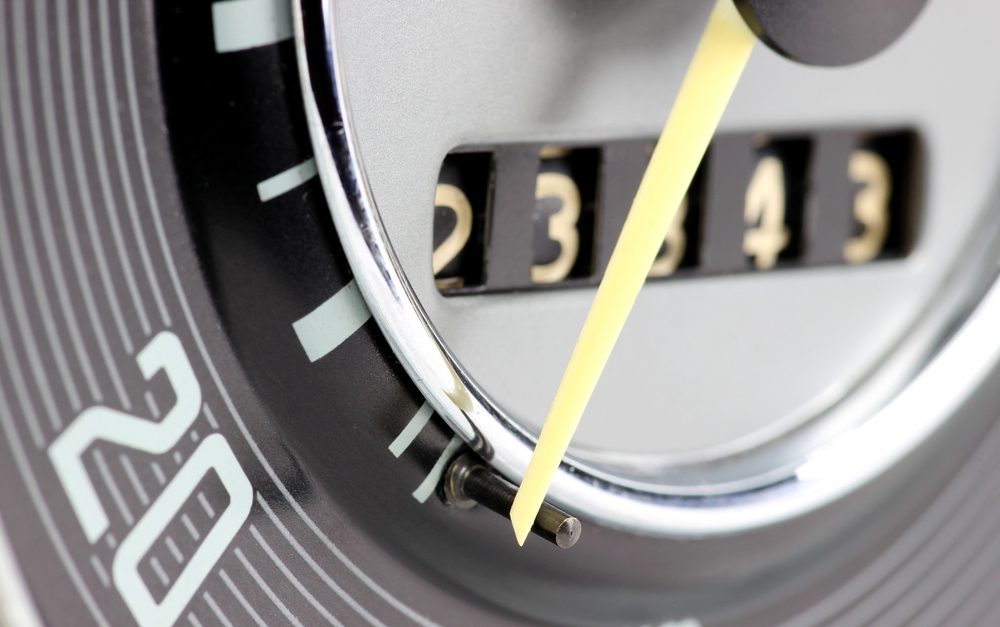
There are all sorts of things that dictate a car’s value, but one of the biggest is how many miles it’s done. Most used car buyers assume that once a car has notched up much more than 70,000 miles it’s going to start getting expensive to run, with major items such as the suspension, exhaust and clutch potentially all in need of replacement. It’s always been the same, which is why for decades now, one of the biggest problems you face when buying a second-hand car is working out whether the mileage shown is what the car has really done. That’s because as many as one in 16 of the cars checked by hpi has a mileage discrepancy which means it may have been clocked. Another reason for the popularity of clocking is the huge increase in the number of people signing up to a PCP (Personal Contract Plan) and to a lesser extent, PCH (Personal Contract Hire). These come with a mileage cap that can be as low as 5,000 miles per year, although 8,000-10,000 miles is more typical. With a penalty of at least 8p per mile payable for exceeding the limit, it’s not unusual for these cars to be clocked just before they’re handed back – ready to be sold on. Fifty years ago, when cars were only fit for scrap by the time they’d done 70,000 miles, winding back the odometer (the mileage displayed on the dash) by 30,000 miles could provide a new lease of life – at least in the eyes of a potential buyer. The thing was, back then a car that had covered 70,000 miles would have an interior, engine and gearbox that were so worn, it wasn’t hard to spot that the car had been clocked. Wear to the seats, gearknob, pedal rubbers and steering wheel, plus threadbare carpets were the obvious signs of a high-mileage car. Nowadays things aren’t so simple, with a well-maintained vehicle potentially capable of clocking up the thick end of 150,000 miles while still looking and driving like new. Things are made even easier for the clockers by a move towards digital odometers. At one time all cars were fitted with an analogue odometer that displayed the mileage within the speedometer. To clock the car the speedo had to be removed and the digits wound back, so it was often easy to tell that something was amiss because the digits wouldn’t quite line up, or the screws that held everything together would be damaged. But now, all that’s needed is a laptop and some software. Hook one of these up to the car‘s ECU (Electronic Control Unit, or brain) and you can wipe off as many miles as you like. Few people do the work themselves as they don’t have the necessary technology to hand, but there’s no shortage of mileage correction companies out there, happy to do the work. These companies exist because digital odometers can go wrong, or fail altogether. Because car dealers don’t have the skills or equipment in-house to deal with this, they outsource the work to independent companies who will do the work for anybody – trade or private. It’s not illegal to adjust a car’s mileage but it is against the law to misrepresent a car when selling it. But who is going to wind back the clock on their car, then at resale time disclose that the mileage has been reduced? You can protect yourself though. If the car is over three years old you can check its MoT history which logs the mileage, although a car is most likely to be clocked within the first three years of it being registered. You should never buy a car without first checking its service history, and most invoices for any work done will log the car’s mileage. Buy an HPI check before purchasing the car and this will also include a check of the National Mileage Register, which will throw up any anomalies. The big caveat with all of these things is that a vehicle can be clocked more than once. If a car covers 40,000 miles each year and has to be serviced every 20,000 miles, it could go to an independent garage to be serviced at 20,000 miles, then at 40,000 miles it could go to the franchised dealer – having had its mileage wound back to 20,000 miles. Any invoices from the independent garage would be conveniently lost and the only receipts you’d see are those from the franchised dealer indicating half the genuine mileage. When some cars are clocked, everything is retained within the ECU, so quizzing this will highlight the mileage having been adjusted. When buying a car it’s worth seeing if a marque specialist or franchised dealer can establish if the car has been clocked; you’ll probably be billed £50-£100, but if it stops you buying a car that’s been heavily clocked it’ll be money well spent. It’s not just about money though; there’s also the safety aspect to consider. Mechanical items have a finite lifespan and many service items are replaced according to a mileage schedule. Replace those components much less frequently and there’s a greater chance of mechanical failure, along with the car failing to work properly. In recent years there have been some very high-profile cases of traders being jailed for shaving hundreds of thousands of miles off dozens of cars, and pocketing big profits as a result. With an overstretched Trading Standards struggling to keep up, it’s up to you to protect yourself as best you can. According to an investigation by The Times, local authorities brought just 140 prosecutions against clockers in a five-year period, with 117 convictions secured. It’s clear this is just the tip of the iceberg, which is why it’s essential that you make as many checks as you can, before parting with your cash. Richard Dredge November 2017 Our free MOT History check will show you the mileage recorded at every MOT test, allowing you
Electric Cars – Different Types of Electric Cars

There’s been a lot of talk about air pollution in the press lately and a lot of focus on the effect of petrol and diesel vehicles. Motorists who want to do their bit to improve air quality have probably thought about switching to an electric or hybrid car but are unsure of the differences between the different types of electric vehicles available. In our slide show below we explain the difference between the 3 main types of electric cars currently on the market so you can understand your BEV from your PHEV. Discover some interesting facts and stats about service and maintenance costs, battery range, charging times, and depreciation of electric vehicles. Electric Cars – The Electric Era from hpi.co.uk Thinking of buying or selling a car? Visit hpi.co.uk for the best information available on any car