

What car options should I choose?

New cars come with more personalisation options than ever; no longer is an extensive options list the preserve of the luxury car buyer. Buy a city car or supermini and you can still easily spend thousand of pounds on extra equipment – the question is, how far should you go? It would be easy to think that when you buy a new car you should choose the specification according to your own wishes and requirements. But it’s always worth thinking ahead, as you could end up seriously out of pocket if you don’t. The key thing to consider when ordering your new car is how long you’re likely to keep it. If you plan to keep it until it drops, how well it holds its value isn’t really a consideration. So if you’re going to keep your car for a decade or more you might as well spec it exactly how you want it as you’ll enjoy using it that much more. Few people keep their car that long though; they’re more likely to replace it for something newer after 3-5 years. This is where you have to be much more careful with the options list; get carried away and you could lose a fortune at trade-in time.
Common V5C scams
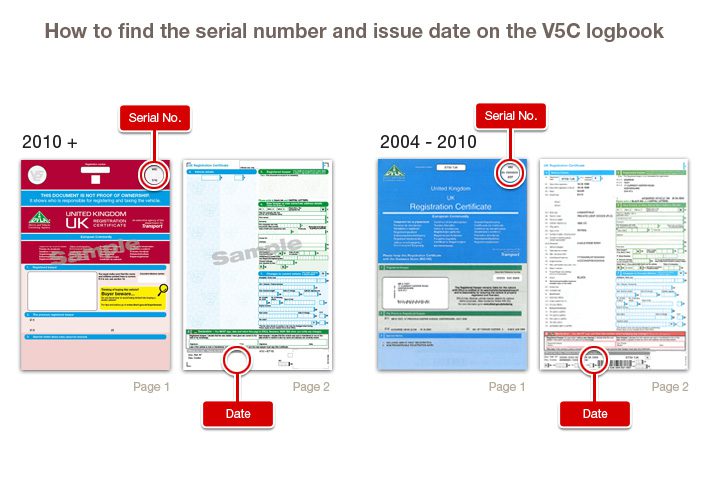
Your car’s registration document, or V5C, is a summary of its details and history along with its owners. It’s a print-out of what information is held on your car at the Driver and Vehicle Licensing Agency (DVLA). The V5C is one of the most important documents when buying or selling a car, but it logs only who is the registered keeper – and they may be different from the legal owner. Since October 2002 it has been illegal to sell a car without a valid V5C, so don’t ever accept an excuse that it has been lost as you can apply for a replacement easily enough. When buying a car, the registered keeper should be the person you are buying from, and the VIN, or chassis number, should be the same as the one on the car. Because the V5C is a summary of the car’s details on the DVLA database, there are a few scams that can catch you out, often when you’re buying a car.
HPI LAUNCHES RECALL CHECK
Working in partnership with the SMMT to protect consumers against buying a car with a manufacturing fault or defect www.hpicheck.com/recall-check Vehicle history check expert, HPI, is helping used car buyers to make even safer purchase decisions with the launch of the HPI Recall Check. Now consumers can find out if a vehicle they are looking to purchase has been officially recalled by the manufacturer. The UK’s automotive industry boasts one of the highest recall and repair success rates across the world, exceeding 90% following a recall campaign; the launch of the HPI Recall Check supports this commitment, ensuring millions of vehicles remain safe. Ian Rendle, Managing Director for cap hpi explains; “If a manufacturer spots a pattern of problems or potential problems, it will recall the cars affected to official dealers, so those faults can be fixed free of charge. In some cases, recalled vehicles are being checked in case there’s a problem, not because there definitely is one. But, through no fault of the manufacturer, there are instances when a recall notice is missed, such as when a vehicle is transferred between owners.
What is a logbook loan?
According to the Office for National Statistics (ONS), as of January 2016 the average household debt stood at £11,800. This figure includes student loans but excludes mortgages, and it means a lot of us are in the red instead of the black. Despite so many of us owing so much money (the ONS also reckons UK homes typically owe 26.5% of their annual income on loans and credit cards), borrowing money has never been cheaper. Take out a loan on the high street and you can enjoy interest rates of little more than 3%. We recently brought you a blog on car finance options, but there was one that we deliberately omitted: the logbook loan. We excluded it for two reasons; firstly because we’re covering the topic in full here, and secondly because logbook loans should always be treated as a last resort. The problem with taking the logbook loan route is that it’s a very expensive way of borrowing money, which is why those who decide to sign up almost always have a poor credit rating and are rarely home owners. As a result they can’t borrow money cheaply, via a loan that’s secured on a property. As the name suggests, a logbook loan is secured on a vehicle, which means the lender can seize that vehicle until the loan is paid in full. Under the terms of the deal you can keep using the vehicle as long as you don’t default on the payments – but do so and the vehicle will be snatched back. As a used car buyer you need to be especially careful that you don’t get duped into buying a car with a logbook loan against it. Do so and the lender will snatch the car back so you’ll lose everything. The key is to get an HPI check on any potential purchase, as this will flag up if the car has any finance owing on it.
How professional car inspections work

When you’re buying a used car there are all sorts of things that you need to take into account. Has it been crashed then poorly repaired? Is the suspension dangerously worn? Is the catalytic converter on its last legs? How much life is left in the battery? Even someone who has been buying and selling cars for years can be caught out thanks to the complexity of the latest models. There are just so many things that can wear out or go wrong – and they can cost a pile of money to fix. So it’s no wonder that a lot of used car buyers turn to the experts before they buy a used car, by investing in a professional used car inspection. That way they’re getting an expert opinion on the condition of a potential purchase and there should also be some peace of mind should things go wrong further down the line. Not all vehicles are eligible for inspections though. Many companies won’t scrutinise classic vehicles, US imports, kit cars or high-performance cars, and hybrid or dual-fuel models are sometimes out of bounds too. Any vehicle being inspected must also have a current MoT. But if you’re considering buying a mainstream car made within the last 15 years, investing in a professional inspection could be a seriously canny move.
How to write a car advert

Every year anywhere between six and eight million used cars change hands. At any one time there are hundreds of thousands of used cars for sale, so how do you make yours stand out from the rest? The key is to come up with an advert that lifts your car above all the others out there. The first golden rule is that you take some time compiling your advert. Don’t just throw it together; make every word count so the reader isn’t left asking questions. There are certain pieces of information that you must include, most of which focus on the car’s specification. But one that’s often left out is why the car is being sold; if it’s so desirable, why don’t you want it any more? It’s also worth mentioning where in the country you are, especially if your car isn’t worth much. Nobody is going to travel 300 miles to buy a £600 supermini, but if you’re selling something rare, valuable and sought after potential buyers will travel a lot further. These are the pieces of information that you should include, and be specific while you’re at it. So don’t just mention that your car comes with an MoT; say how many months are left before a new ticket is due.
10 reasons why you could be driving uninsured

It’s a simple truth; drive a car without insurance and you’re breaking the law. Despite this, it’s reckoned there are more than 1 million uninsured drivers on our roads. They cost law-abiding motorists £400 million each year but only 150,000 or so are prosecuted annually. If you’re caught driving without insurance your car will be seized, may be crushed and you can also expect between six and eight points on your licence. That’s as well as a fine of around £300 – although it could be far more if the case goes to court. Many of those who drive without insurance do so deliberately, but in a lot of cases it’s because of an oversight, poor communication or some kind of misunderstanding. So before you drive any car, make sure you don’t fall prey to one of these:
HPI offers tips on the art of negotiation to get a used car bargain

Car buyers urged to take the property buyers approach to clinching a deal Despite a buyer’s best intentions, if a dream used car becomes available that ticks all the right boxes – except for the price tag – the budget can all too often get quickly forgotten. To stop the heart ruling the car buyer’s head, vehicle history check expert, HPI, is offering a simple guide to the art of negotiation, helping buyers secure a good deal whether they are buying, selling or part-exchanging a car. Neil Hodson, deputy managing director for cap hpi explains, “Despite a car being the second largest financial purchase a person will ever make – a property being the biggest – 56% of us would rather pay the asking price for a used car than negotiate with a dealer*. This compares to just 16% of people who would rather offer the asking price for a house than negotiate**. In fact, as many as a third of us would rather negotiate a pay rise at work than haggle for a car.
Car finance options

There are all sorts of ways you can raise the funds to pay for a car, with some better than others. Here we’ll help you through the maze, but there’s one thing to remember above all else: it’s the final cost that matters. This will depend on: How much you borrow The monthly payments and any additional payments at the end or start of the deal The interest rate you’re paying and the repayment period Any penalties you’ll incur if you pay off the loan early Before you sign anything ask what the total amount repayable will be, then compare this figure when shopping around. It’s this figure that matters ultimately, unless you’re more concerned with how long you have to pay off the debt rather than how much it’ll cost you. By spreading out the loan over a longer period your repayments will be lower, but you’ll pay more for the privilege.
Where will buyers find the real deal?

HPI warn drivers that money isn’t everything when buying a used car www.hpicarbuyersguide.co.uk Many used car buyers are tempted to buy from the place they feel is giving them the best financial deal, but the initial saving may end up costing a whole lot more down the line. HPI, provider of the HPI Check® is warning buyers to do their research and understand fully the level of protection each option offers when it comes to deciding where to buy their next pride and joy. Buying from a dealer, an auction or privately all have their benefits, but it’s important to also consider the risks. Buying Privately Buying privately is often where some of the greatest bargains can be found, but in return, the buyer’s legal rights are more limited than when buying from the motor trade. Even though cars being sold privately are required to be advertised accurately, it’s important to look out for any vague statements which could be masking something sinister. Unscrupulous private sellers will often arrange to take the car to the buyer’s home or meet in a neutral place such as car park or layby. Buyers must not be fooled by this trick; always ask to meet at the seller’s home address and check that their address is detailed on the log book, proving that they are the vehicle’s registered keeper.