

Convertibles, coupé-cabriolets and supercars that hold their value
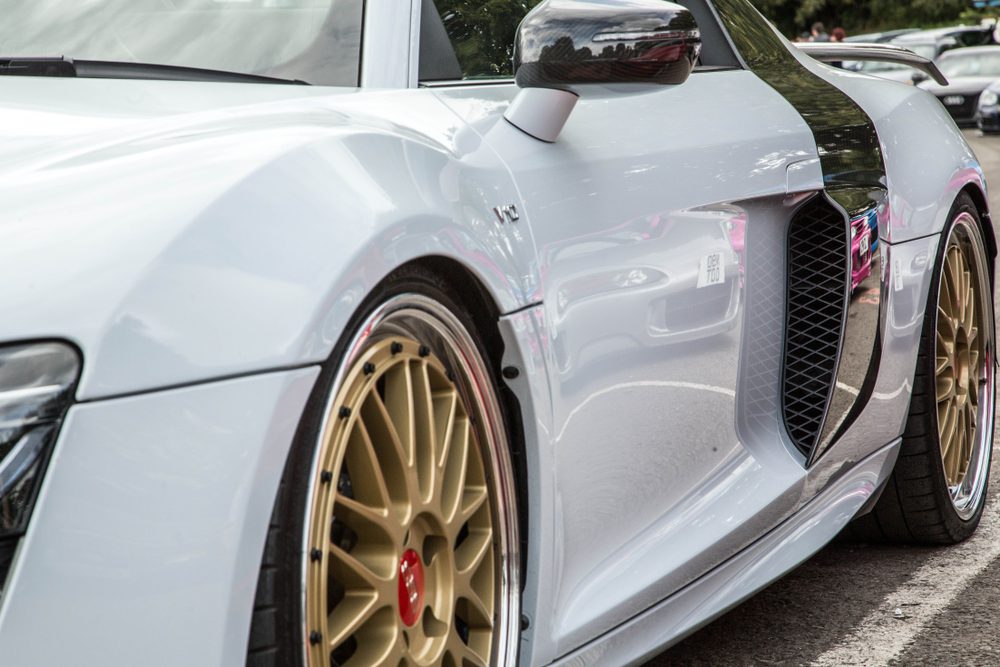
In a recent blog we introduced our latest tool which allows you to discover how well (or otherwise) just about any mainstream car retains its value. You can discover what a new car will be worth in three years as well as how much the cars of 2016 will be worth when they reach six years of age in 2022. In that last article we looked at some of the key players within the city car, supermini and small family hatchback segments. Those are the cars that sell in big numbers, but what about some of the more aspirational cars? How do the models that sell in smaller numbers fare, when it comes to losing or retaining value? Convertibles With summer about to hit, we’re going to look at what in theory is one of the most seasonal segments of all – the convertible. Despite the UK’s frequently inclement weather, we buy a lot of open-topped cars; in fact we buy more of them than any other European country. Whereas convertibles used to be noisy and leaky so you had to be an enthusiast to own one, when the roof is up on a modern drop-top it can be as refined and comfortable as a saloon. As a result, year-round use is perfectly possible, which is why values are less seasonal than they used to be. For new cars, at the top of our retained value table is the latest Porsche 911. Incredibly, 19 of the top 20 places are taken by Porsches, with the outgoing and incoming 911s dominating things – although the 718 Boxster also appears several times. The sole top 20 place that isn’t taken by a Porsche is taken by the Bentley Continental GTC in 6.0-litre W12 form. That’s a car that is expected to retain 56.9% of its value, whereas the Fiat 500C at the bottom of the table will be worth just 30.8% of its new list price after three years. However, while the Fiat will shed around £10,000 in that time, the Bentley will go down in value by £70,000 or so. It’s a similar picture where the convertibles of 2016 are concerned; by the time these reach their sixth birthday in 2022 it’s the Porsche 911 and Boxster which will have held their value the best. Again, 19 of the top 20 cars are Porsches with only the Range Rover Evoque 2.0 Si4 HSE Dynamic breaking up the party with an appearance at number 12. At the top of the pile is the limited edition Boxster Spyder which is expected to hold on to 38.7% of its value; at the bottom of the table this compares with the Vauxhall Cascada 2.0 CDTi Elite which is pegged at just 14.4%. The Cascada’s showing reflects how important an aspirational brand is to buyers; we would all prefer to own a car that’s seen as premium rather than mass-market. As a result, eight of the 10 bottom places are taken up by the Vauxhall Cascada, Citroen DS3 or the DS 3. What may be more of a surprise is that the other two slots are taken by the BMW 6 Series convertible in 640d form. Although coming from a premium brand, the 6 Series perhaps never gained the following that BMW wanted, and is no longer in production. However this BMW will be surprisingly affordable in 2022; in 640d SE form we expect it to be worth just 14.6% of its new list price when six years old. Coupé-cabriolets We separate coupé-cabriolets from convertibles with a cloth roof, and what’s interesting is how few drop-tops are now available with a folding hard top. There was a time when convertibles were all going this way, but now there’s just the two-seater Mercedes SLC and the four-seater BMW 4 Series – and the former is about to go out of production. By the end of the summer the only coupé-cabriolet on sale in the UK will be the BMW 4 Series. We expect the Mercedes to hold on to more of its value than the BMW (41.1-44.0% compared with 28.6-35.2%) and if we look at the 2016 coupé-cabriolets the situation is mirrored there, with the Mercedes (which was then called the SLK) and the 4 Series both dominating the top of the table. The only other contender is the Renault Megane, which unsurprisingly trails the two Germans thanks to its lack of a premium badge. Supercars Supercars are generally the most expensive and exclusive cars you can buy; the only models that can compete are ultra-luxury saloons from the likes of Rolls-Royce. As a result, while the Ferrari 488GTB retains more of its new list price than any of its rivals, with a forecast residual value of 64.5% it will still shed over £70,000 within three years. Throughout our supercars table Ferrari is up against Aston Martin and Lamborghini, with the Audi R8 bringing up the rear. It’s interesting that the Audi trails its more prestigious rivals by quite so much; the 5.2 V10 coupé will retain as little as 37.5% of its value whereas the lowest-performing Lamborghini is pegged at 47.7%, while the lowest-performing Aston Martin is rated at 52%. On the Audi’s part it’s certainly not because of any lack of ability as this is one of the best driver’s cars out there – it’s all down to the badge not being as aspirational as those of its rivals. Looking at the supercars of 2016, and what they’ll be worth in 2022, once again it’s Ferrari that leads the table with the top seven places. Lamborghini takes the next seven slots with various iterations of the Aventador and Huracan, with the Audi R8 taking places 15-19. Perhaps the most interesting thing about taking this longer-term view is how much more mixed up things are. Things are very polarised within those first three years, but by the time these supercars have reached their sixth birthday, some versions of the Audi R8 hold on to their
Cars that hold their value: part 2
We love number crunching here at HPI, and we especially love to see how different cars compare when it comes to running costs and depreciation. As we’ve written before, many buyers assume that rival cars cost much the same to run and that they lose value at much the same rate, but nothing could be further from the truth. Working with and presenting data is what we do, and our latest tool allows you to compare depreciation levels of just about any car currently on sale as well as those on sale three years ago. As you can see on our tables and graphs below, not only have we predicted how much value will be lost by each of the mainstream cars currently on sale, when they reach their third birthday in 2022, but we’ve also logged what every car registered in January 2016 will be worth in 2022 when they reach their sixth birthday. The latter takes into account actual depreciation over the past three years and predicted depreciation over the next three years. As you’d expect, it makes fascinating reading. City cars The tool allows you to search by make, model and derivative, or by market segment. With almost 7000 cars in there we’ve covered everything from the very affordable to the very aspirational. For this article we’ll focus on the former and we’ll kick off with the smallest vehicles of all: city cars. At the top of the pile is the Abarth 595 Turismo, a new example is expected to retain an impressive 48.6% of its value over the next three years; and a 2016 example is expect to retain 28.8% of its value by the time it’s six years old. To put the Abarth’s performance into context, at the other end of the spectrum is the Peugeot 108 1.0 Allure which should retain just 31.4% of its value when 3 years old. While this might seem like a rather poor performance, it’s closer to the norm than the Abarth because most mainstream cars lose value quite quickly. The Abarth performs so well largely because it’s a hot hatch made in small numbers, so it’s something of a collector’s piece. However, the Kia Picanto is very much a mainstream car and in 1.0 Wave form it’s not far behind the Abarth; we reckon it’ll be worth 47.1% of its new list price when it’s three years old. Intriguingly, the top 20 city cars list is dominated by Abarths (595 and 695), Kia (Picanto) and the Ford Ka+. While the latter two sell in big numbers, they both have a keen following which keeps values high. You don’t have to drop very far down the table to see retained values drop quite sharply. Go down a few dozen entries and the retained values are around 40% for cars such as the Skoda Citigo, Toyota Aygo and some versions of the Fiat 500. What’s interesting is that at 38.5% is the Ford Ka+ diesel, whereas its petrol-engined counterparts retain more like 45% of their value after three years. While this may be down to less demand for diesel, much of the higher level of depreciation will be down to the car’s higher list price when new. Superminis A posh badge and a bit of luxury will work wonders for a car’s retained value. An all-new Audi A1 has recently been launched, and according to our calculations this model dominates the top end of the supermini segment over the next three years, when it comes to retained value. Only petrol-engined cars are available and whichever one you buy it’ll retain around half of its value over the next three years (and as much as 53.6% in the case of the A1 25 TFSI SE), which is especially impressive when you consider that at the bottom of the table the retained value is more like 25-30%. Perennial demand also leads to limited depreciation, which is why the Ford Fiesta also retains around half of its value at 3 years old – at least in 1.5 Ecoboost form. Ford may not be a premium brand, but its cars are often some of the most talented in their respective segments, and that’s definitely the case where the Fiesta is concerned. Not far behind is the Mini, which holds on to as much as 47.6% of its value (for the Cooper S Sport II) – although this drops to 40.1% for the Mini One Classic in automatic form. Once again this shows how a bit more power and luxury can have a very positive effect on depreciation rates; entry-level cars often lose a greater proportion of their value than their more upmarket equivalents. Small family cars Known as the lower medium segment in the trade, the small family car sector is the most popular across the whole of Europe. If minimal depreciation is key to you as a buyer, it’s the Toyota Prius that you need to put on your shopping list as this is worth up to 60% of its new list price after three years. The Prius is a car with an emphasis on low running costs, so it’s interesting that the car that gives it the toughest time in our tables is the new Mercedes-AMG A35 – a car with a focus on performance and luxury. Buy an A35 and the retained value will be as much as 58.7%. However, if you buy one of the more mainstream editions this figure can be cut to as little as 46.7%. While 46.7% may be less desirable than 58.7%, in the grand scheme of things it’s still impressive – not least of all because the cars at the bottom of the table are sitting at 25% or so. Or to put it another way, whereas the Mercedes A-Class is expected to retain around half of its value over the next three years, some variations on the Fiat Tipo, Skoda Rapid, Seat Toledo and Peugeot 308 model ranges will lose more like three-quarters