

Car Clocking
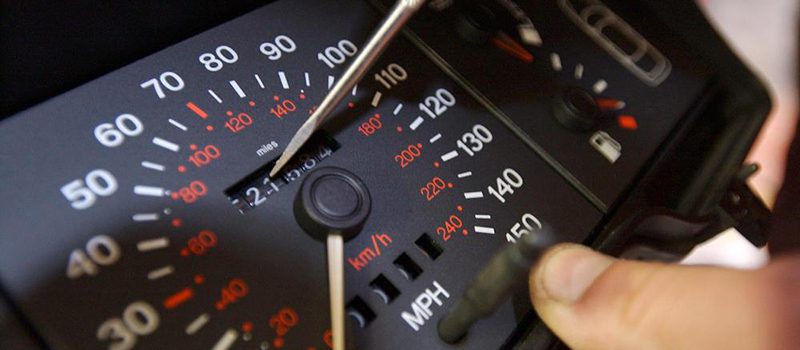
When buying a used car, you want to trust that what you’re paying for is what you’ll get. Unfortunately, some sellers use deceptive tactics like car clocking – tampering with a car’s odometer to lower the displayed mileage. A lower mileage makes the car seem newer and more reliable than it really is, allowing the seller to demand a higher price. Let’s break down how to spot car clocking, what to do if you encounter it and how to protect yourself in the future. What is car clocking? Car clocking involves altering the mileage on an odometer to make it appear as if the vehicle has been driven less. Sellers do this to increase a car’s value, as lower mileage typically bumps prices up in the second-hand market. Car clocking is not only dishonest – it’s illegal. A clocked car can hide years of wear and tear. For instance, components like the engine, suspension and brakes may have far more use than the displayed mileage suggests. This can lead to costly repairs or, worse, safety risks on the road. Our data suggests that one in 11 vehicles on the road in the UK has a mileage discrepancy – and we believe this issue is getting worse, costing motorists over £800 million a year. Risks of buying a clocked car The risks of buying a clocked car go beyond overpaying. Hidden mileage can mean you’re driving a car with undiagnosed mechanical problems, which could lead to costly repairs down the line. Worse, the car could be unsafe due to neglected maintenance, putting you and your passengers at risk. Additionally, if you knowingly – or unknowingly – sell a clocked car in the future, you could face legal trouble. It’s better to avoid this situation entirely by taking the proper steps before you buy. How can you tell if a car has been clocked? Spotting car clocking isn’t always straightforward but there are some warning signs you can look out for. ·Wear and tear: Look at the car’s pedals, steering wheel and seats. Do these parts show wear that doesn’t match the mileage? For example, a car showing 20,000 miles shouldn’t have a noticeably worn driver’s seat or scuffed pedals. ·Service records and MOT history: Compare the recorded mileage in the car’s service book or MOT history to the odometer reading. Use our free MOT history check to find recorded mileages, MOT results and more. Sudden drops or irregularities in the mileage suggest all is not as it should be. ·Odometer tampering: In modern cars with digital odometers, tampering can be harder to detect. However, any signs of the dashboard being removed or tampered with could indicate mileage adjustment. ·Use hpi check®: The most reliable way to confirm a car’s mileage is by running a vehicle history check. hpi check® provides a detailed report on a car’s mileage, outstanding finance, previous damage and more. It’s an essential step before buying a used car. How to avoid car clocking scams The best way to protect yourself from buying a clocked car is to take preventative measures. 1. Buy from reputable dealers: Professional dealerships are unlikely to sell clocked cars because they have reputations to uphold. Avoid cash-only deals and sellers who refuse to provide documentation. 2. Inspect the car thoroughly: Pay attention to signs of wear and tear that don’t match the mileage. Take your time during the inspection and bring someone you trust with you for a second opinion. 3. Verify all paperwork: Cross-check the V5C logbook, service records and MOT history. Look for consistent mileage records and avoid cars with missing documents. 4. Always perform an hpi check®: It’s a small investment compared to the potential loss of buying a clocked car. Our detailed reports reveal the vehicle’s full history, including mileage anomalies, outstanding finance and whether it’s been written off. If you think a car you’re considering buying might be clocked, politely but directly ask the seller about any mileage discrepancies. Genuine sellers will often have an explanation, such as repairs or replacements that didn’t get recorded. If you confirm clocking and the seller can’t provide a valid explanation, report them to Trading Standards. Clocking is illegal and sellers should face the consequences. If you confirm clocking and the seller can’t provide a valid explanation, report them to Trading Standards. Clocking is illegal and sellers should face the consequences. What to do if your mileage has been clocked? It can be distressing if you discover your car’s mileage has been clocked but it’s important to take immediate steps to put things right. Start by having the car inspected by a trusted mechanic to assess its actual condition and safety. Avoid using it if you think it may be dangerous. Gather all relevant documentation, including service records, MOT history and an hpi check® to confirm the discrepancy. Then contact the seller and request an explanation or compensation. If they refuse, report the issue to Trading Standards or the police. How to know if a car has been clocked with hpi check® Car clocking is a serious issue that can cost you money, compromise your safety and cause legal headaches. But we make it easy to avoid falling victim to this scam. A mileage discrepancy check is provided with every hpi check® report, using data from the National Mileage Register, which contains over 369 million readings. It’s the quickest and most reliable way to protect your investment and ensure peace of mind. For more information on beating vehicle scams and other automotive tips, check out our knowledge hub.
Keep Your Car Roadworthy with HPI: Essential Vehicle Safety Tips

As February draws to a close, it’s the perfect time to reassess your driving habits and ensure your vehicle is in safe, reliable condition for the year ahead. Keep Your Car Roadworthy with HPI by prioritising vehicle safety. HPI, the UK’s leading provider of vehicle history checks, urges motorists to recognise the hidden risks in their vehicles—whether it’s a stolen car, inaccurate mileage, or a history of past accidents. Key Risks in Your Car’s History With over 250 cars flagged daily for security concerns, and 1 in every 28 cars on the HPI register listed as written off, it’s crucial to verify your car’s history. In 2024, more than 50,000 cars were reported stolen, and over 662,297 vehicles had altered mileage readings. Keep Your Car Roadworthy with HPI by regularly checking your vehicle’s background to avoid these hidden risks. 1. Prioritise Regular Vehicle Maintenance Routine maintenance checks are key to keeping your car roadworthy with HPI. Neglecting tasks like checking tyre pressure, oil levels, and brakes can lead to mechanical failures and accidents. A proactive maintenance approach not only preserves your car’s value but also keeps it safe and reliable on the road. 2. Keep Software Updated to Enhance Security As vehicle technology evolves, staying on top of software updates is crucial to keeping your car roadworthy with HPI. For example, keyless entry systems are vulnerable to car theft when criminals intercept key codes. Stay informed about recalls or software updates that address these security concerns, ensuring your vehicle is always protected. 3. Verify Your Vehicle’s Mileage Over 1,800 cars daily are flagged by HPI for having tampered odometers. Whether you’re buying a used car or verifying your current vehicle’s mileage, it’s essential to keep your car roadworthy with HPI by ensuring accurate mileage readings. Odometer fraud can compromise the safety and value of a vehicle. 4. Protect Against Vehicle Cloning Vehicle cloning, where criminals alter a car’s identity, is on the rise. To keep your car roadworthy with HPI, always check your car’s identity using an HPI Check to ensure it hasn’t been cloned. Cloning can lead to serious legal issues if you unknowingly purchase a stolen car. 5. Avoid Used Car Scams Buying a used car requires diligence to avoid scams. Use HPI to keep your car roadworthy with HPI by identifying risks like insurance write-offs, outstanding finance, or stolen vehicles. An HPI Check is essential for making an informed and safe purchase. 6. Know Your Vehicle’s Full History Whether you’ve owned your car for years or are purchasing a new one, knowing its full history helps you avoid costly surprises. An HPI Check provides an extensive report sourced from the DVLA, police, and insurance companies, revealing any hidden issues that could affect your car’s value and safety. To keep your car roadworthy with HPI, always know your vehicle’s full history. 7. Drive Economically for Safety and Savings Driving economically not only helps you save on fuel but also improves vehicle safety. Smooth driving, maintaining a steady speed, and avoiding sudden braking help reduce wear and tear on your car. These habits can help keep your car roadworthy with HPI by minimising unnecessary repairs and ensuring long-term reliability. Insight from Matt Freeman at HPI Matt Freeman, managing consultant at HPI, shares: “HPI’s vehicle history checks help motorists identify potential risks such as mileage discrepancies, written-off cars, and stolen vehicles. By regularly checking your car’s background, you ensure safer driving and avoid unnecessary financial surprises.” HPI has been a trusted provider of vehicle history checks since 1938, offering the most comprehensive service to verify a car’s past. Whether you’re buying a new car or simply checking your own, an HPI Check is your best defense against fraud. Protect Your Car with HPI As we wrap up February, make sure your vehicle is ready for the year ahead. Keep your car roadworthy with HPI by ensuring your car’s history is clear of any issues. HPI’s vehicle checks provide essential information to keep you safe on the road, from identifying stolen cars to flagging mileage discrepancies. Protect your investment, ensure your car’s safety, and drive with confidence. For more information or to run a vehicle check today, visit HPI.co.uk.
Stolen Finance Vehicles Recovery: How NaVCIS and HPI Are Making a Difference

The recovery of stolen finance vehicles is essential to protecting buyers and preventing fraud. NaVCIS (National Vehicle Crime Intelligence Service) leads the effort, working closely with HPI. Together, they track and recover stolen vehicles still under finance in Eastern Europe. By using advanced technology and precise data, they combat vehicle fraud and safeguard buyers. How NaVCIS and HPI Recover Stolen Finance Vehicles NaVCIS, a UK-based police unit, focuses on recovering stolen finance vehicles. The team targets regions like Bulgaria and Romania, where criminals frequently re-register stolen UK cars. The Finance and Leasing Association (FLA) funds NaVCIS to tackle this issue. Criminals acquire cars through finance agreements, either under their own names or using fake identities. After securing the vehicles, they swap the number plates and ship the cars abroad. Once they arrive in another country, criminals attempt to re-register them. HPI and NaVCIS help authorities swiftly identify stolen vehicles and recover them before they are sold. The Role of HPI Checks in Stolen Finance Vehicles Recovery HPI plays a key role in the recovery of stolen finance vehicles. Their comprehensive database and real-time vehicle data help law enforcement identify stolen cars and those with outstanding finance. Local authorities across Europe rely on this data to act quickly and recover stolen vehicles. Sharon Naughton, Head of NaVCIS, explained: “HPI helps us identify stolen finance vehicles quickly. Their data allows us to act efficiently, returning stolen vehicles to the finance companies.” HPI’s Data Supports the Recovery of Stolen Finance Vehicles Across Europe NaVCIS and HPI have achieved an impressive recovery rate. Nearly 80% of stolen finance vehicles flagged by HPI checks have returned to their rightful owners. In Bulgaria alone, HPI identified 14 stolen vehicles, recovering seven there. Four additional vehicles were found in Romania during the re-registration process. This collaboration ensures stolen vehicles return to UK finance companies. HPI’s real-time data helps prevent criminals from profiting from stolen cars. Protect Yourself: The Importance of HPI Checks As vehicle fraud increases, protecting yourself when buying a used car becomes essential. An HPI check reveals if a vehicle has been stolen or has outstanding finance. HPI’s detailed reports equip buyers with the information they need to make safe, informed decisions. An HPI check provides a full vehicle history, including accident damage and previous ownership details. It helps buyers avoid stolen vehicles and cars with unresolved issues. Stay Protected: Check Your Vehicle’s History with HPI Before buying a used car, always run an HPI check. It ensures the vehicle is free from hidden problems and hasn’t been stolen.
Driverless Cars Research UK: Shifting Public Attitudes Towards Autonomous Vehicles

Recent Driverless Cars Research UK reveals that public attitudes toward autonomous vehicles in the UK are changing. Commissioned by HPI, a leader in vehicle history checks and valuations, this study surveyed over 2,000 UK adults. The results showed that 22% of road users would trust a driverless car and feel comfortable traveling in one. As autonomous vehicle technology develops, more people are becoming open to the idea of self-driving cars on UK roads. Key Findings from Driverless Cars Research UK The Driverless Cars Research UK highlights clear differences in how people of various genders and age groups feel about autonomous vehicles. Men are more trusting of self-driving technology, with 28% expressing confidence in driverless cars compared to only 16% of women. Age also plays a key role, with younger generations showing more trust in the technology. A third (33%) of 18-26-year-olds feel at ease with driverless cars, whereas just 17% of those aged 55-64 share the same sentiment. The least trusting group are those over 65, with just 12% confident in the technology. Regional Trust in Driverless Cars in the UK The Driverless Cars Research UK also reveals regional variations in trust towards autonomous technology. Londoners (21%) are the most trusting, followed by residents of the East of England (19%) and the West Midlands (18%). In contrast, Wales has the lowest level of confidence, with only 9% of people trusting driverless cars. Meanwhile, 18% of Scots would feel comfortable using a self-driving vehicle. Public Opinion: Road Safety and Driverless Cars When asked about road safety, just 15% of people believe that driverless cars will make UK roads safer. Meanwhile, 22% feel that road safety will remain unchanged with the advent of autonomous vehicles. However, excitement about driverless cars is apparent, with 24% of respondents expressing eagerness about the technology, rather than fear. Interestingly, 30% of men are excited by the prospect of self-driving cars, compared to only 18% of women. Interest in Self-Driving Cars: Will the Public Embrace Autonomous Vehicles? The Driverless Cars Research UK also found that 25% of men would consider purchasing a self-driving car that could allow them to carry out other tasks while driving, such as reading or attending a meeting. This number is more than double the 12% of women who feel the same. Semi-Autonomous Features Already in Use Over 40% of UK adults already drive vehicles equipped with semi-autonomous features, including lane assist, adaptive cruise control, and automatic emergency braking. Men are slightly more likely to have these features in their cars (43%) than women (40%). Additionally, 21% of men regularly use these semi-autonomous features, compared to just 6% of women. Concerns About Autonomous Technology Despite increasing trust in self-driving cars, concerns remain. The biggest worry for 57% of respondents is losing control in a driverless car. Other concerns include the state of the roads (38%), technology reliability (35%), and the potential for accidents (41%). Additionally, 49% of people worry about the behavior of other road users, and 37% are concerned about how driverless cars will interact with one another on the roads. However, 43% of respondents have no concerns about losing control, and 35% expressed trust issues with the technology itself. What’s Next for Driverless Cars in the UK? The Driverless Cars Research UK reveals that public opinion is gradually shifting, with increasing comfort around autonomous vehicles. While only 8% of people believe that manufacturers have done enough research to convince them that driverless cars are safe, the future of autonomous vehicles looks promising. In May 2024, the UK government passed the Automated Vehicles Act (AV Act), which outlines the legal framework for self-driving cars to operate on UK roads. This act includes key safety standards, data security protocols, and insurance requirements, with the potential for fully autonomous vehicles on UK roads by 2026. Matt Freeman, Managing Consultant at HPI, Comments: “Although we’re not there yet, the Driverless Cars Research UK shows that public acceptance of autonomous vehicles is on the rise. The legal framework is already in place, and we could see fully self-driving cars on UK roads in the next two years. The UK government is supporting autonomous vehicle development through trials and pilot projects aimed at reducing human error, which causes 88% of road accidents. Driverless cars could make roads safer, ease traffic congestion, and reduce our reliance on human drivers for both passenger and freight transport.” Conclusion: The Future of Autonomous Vehicles in the UK For years, drivers have been using features like lane assist and emergency braking, and with advances in artificial intelligence (AI), full autonomy is now closer than ever. The Driverless Cars Research UK shows that public attitudes are evolving, and the integration of self-driving technology into everyday life is becoming more likely. To stay informed about the latest in vehicle history checks, valuations, and autonomous technology, visit HPI.co.uk.
How to Protect Yourself from Vehicle Cloning Scams
What is Vehicle Cloning? Vehicle cloning occurs when criminals steal the identity of a legally taxed vehicle. They swap the original registration plates with plates that belong to another car, often one of the same make, model, and colour. This trick helps them avoid detection by police systems, such as Automatic Number Plate Recognition (ANPR), and carry out illegal activities. Why Should You Be Concerned? Vehicle cloning can have serious consequences. If you buy a cloned vehicle, you might lose both your car and the money you spent on it. The police could seize the car once they discover it’s been cloned. Additionally, cloned vehicles may have hidden issues like altered mileage readings or a history of being written off after an accident, which could endanger your safety. How Do Criminals Get Cloned Plates? In the UK, you need a logbook, driver’s licence, and proof of address to buy a registration plate. However, criminals can purchase “show plates” online or over the phone with little documentation. These plates cost around £20 and are usually dispatched the same day. Once obtained, criminals can use them for illegal purposes on the road. How to Avoid Buying a Cloned Car To protect yourself from buying a cloned car, always carry out an HPI Check before making a purchase. The HPI Check will verify whether the car’s registration number, engine number, and Vehicle Identification Number (VIN) match official records held by the DVLA. This simple check can reveal if the car has been stolen, written off, or has any outstanding finance. Important Tips to Avoid Vehicle Cloning Scams Follow these simple steps to avoid falling victim to vehicle cloning scams: Why an HPI Check is Essential The HPI Check is the best way to confirm a car’s history before buying it. The check will tell you if the car has been stolen, written off, or has any outstanding finance. Plus, it includes a guarantee that offers financial protection if you unknowingly buy a cloned vehicle. Conclusion Taking a few extra steps to verify the history of a car can save you from serious financial and safety risks. By conducting an HPI Check, you ensure the car you’re buying is not a cloned vehicle and that it’s safe to drive. For more information, or to carry out an HPI Check, visit www.hpi.co.uk.
Used Car History: What to Check and How to Check It

Diligence is everything with a used car history. HPI’s guide explains how buyers can uncover them. A physical inspection will tell you a lot about a used car’s history – but it won’t tell you everything. Even what appears to be a pristine example can have a less-than-perfect back story, which could include elements that dent its value or worse. Used car histories are open books if you know where to look, though, and a few straightforward checks can clearly illustrate a vehicle’s past. hpi’s guide explains what to check, how to check it and how to get the best out of the information at hand. The basics They might be obvious, but the basics matter, and they are the best place to start. Check the car’s service history, MOT history, mileage, and number of owners. Do they match the advertisement and/or what the seller is saying? An MOT check is worthwhile because each test records the mileage, which is an important first step in ensuring the vehicle’s mileage hasn’t been altered. This helps to verify the car’s history, illustrates at least some of its mechanical past (whether it passed the first time, needed repairs, or had any advisories), and shows how regularly previous owners tested it. Additional checks can be made to check the accuracy of the stated mileage. Accident history It is the seller’s responsibility to tell potential buyers if a vehicle has been involved in an accident, and if it has, there should be documentary evidence. That obligation doesn’t extend to telling buyers about kerbing a wheel or scuffing a bumper against the garden fence (although a transparent service history detailing such incidents and repairs is good), but rather if the car was involved in a significant accident on the public highway and damaged to the point where its safety could be compromised. The severity of the accident determines whether a vehicle can be repaired to roadworthy standard, and if it has been categorised A or B by insurance assessors, it can’t be. Those letters mean it is a write-off – also known as a total loss – and cannot legally be repaired to a safe standard. Cars marked S or N have lighter damage and can be repaired. Insurers still class them as write-offs or total losses because they are not considered economical to repair, but they were involved in lower-level accidents and can be used on public roads again, providing they are safely repaired by a qualified engineer. Outstanding finance The seller is also responsible for settling any outstanding finance on the car before it is sold. For example, if they bought it with a finance package from a dealer, that must be paid off before they sell it. Even if you bought the vehicle in good faith, if the finance hasn’t been settled, then the lender could repossess it, meaning you could lose the car and the money you paid. Ask the seller if they bought the car with finance, when they paid it off, and if they have documents to support their claim. Stolen and recovered – or not? Once again, the seller must declare if a vehicle was stolen and recovered. Assuming a stolen vehicle was safely retrieved by the authorities and wasn’t damaged in the process (or if it was, it was well repaired), and the seller is clear and honest, there should be nothing wrong with it. However, as with accident damage, a theft can negatively affect a car’s value, so would-be buyers have a right to know its history. Worse, you really don’t want to buy a car that has been recently stolen, so always query rock-bottom prices that seem too good to be true and pause for thought if there’s pressure for a quick sale. Keep an eye out for signs of break-ins – forced damage to locks, door handles, windows boots and any other entry points – and check the Vehicle Identification Numbers (VIN) to make sure they match. These are often found under the bonnet, behind the front doors and sometimes in the footwells. HPI Check: the one-stop shop for car history checks A HPI Check will shine a light on all the above and more. It checks multiple sources of information from the DVLA, the police, the National Mileage Register, insurance and finance providers and other industry bodies to generate a clear and definitive history about any motorised vehicle, including cars, vans and motorcycles. Unscrupulous sellers or owners may seek to alter a vehicle’s mileage through clocking or blocking technology to increase its value. An HPI Check uses data from the National Mileage Register and many other sources to better understand a vehicle’s history. A HPI Check will tell you: A HPI Check will also verify the VIN number, provide a guide valuation and estimated fuel costs, and include an MOT history check. Many dealers include HPI checks as part of their used car sales, and it’s always worth asking to see the digital certificate and querying how recently the check was done. Click here to see a sample hpi check report so you know what a genuine one looks like. If you’re buying from private sellers on eBay or Gumtree, running an HPI Check yourself is worth it. Single checks cost £19.99, and be wary of anyone offering a free check—there is no such thing. Believe your eyes You won’t find it in the service history, but good, old-fashioned common sense never goes amiss when you’re checking a used car. Ask yourself: does the car’s real-world condition match its alleged history? Seeing it in the metal is the final piece of the puzzle, and – as long as you’ve done your homework – if the degree of wear and tear is commensurate with its age, mileage and documentation, then you’re likely onto a winner. However, if it’s advertised as a low-mileage car, but its real-world condition doesn’t tally with the description, ask the seller why and, if you can, interrogate further. For all the tricks of the trade,
CAR CLOCKING – THE ROAD TO RUIN?

LATEST ‘CLOCKING’ DATA REVEALS AN ALARMING INCREASE IN VEHICLE MILEAGE FRAUD What’s the issue? According to our latest data, one in 11 vehicles undergoing an HPI Check is identified as having a mileage discrepancy. That’s a worrying increase of 45% in the past five years and the highest levels of fraud that the motoring industry has ever seen. As a result, UK motorists should beware of buying ‘clocked’ cars with questionable mileage records that could see them being ripped off or even worse, risking their safety. The problem is getting worse year on year and, for anyone in the market buying a used car, it can have serious implications for both finances and safety behind the wheel. As one of the UK’s leading authorities on vehicle checking services, HPI estimates the practice of mileage tampering often known as ‘clocking’ is costing motorists over £800 million every year. It is illegal to sell a clocked car without declaring its genuine mileage, but what may come as a surprise to most people is that the act of altering the car’s odometer is not an offence. The illegal practice of clocking takes place when drivers look to deliberately defraud second-hand car buyers when the vehicle is sold on. The hard evidence The alarming figures from our own HPI Check data show an increase of 22.2% for 2019 over 2018’s figure when one in 14 vehicles was recorded as having a mileage discrepancy. The actual number of vehicles identified as having a confirmed mileage discrepancy for the whole of 2019 was 836,214, a ‘hit’ rate of 8.99% compared to 7.35% (607,981) for 2018. NMR (National Mileage Register) is the official system used to check vehicle mileage by HPI, which has now surpassed over 369 million readings making it one of the largest, most accurate sources for verifying and investigating mileage records. Our data confirms that with the increase to one in 11 cars registering some form of mileage discrepancy, the actual volume of vehicles on UK roads with a mileage discrepancy has increased by nearly half (45%) over the past five years. The statistics make for grim reading. They have increased steadily over the years, recorded as one in 14 in 2018, one in 16 in 2017, 2016 and 2015 and one in 20 vehicles in 2014. In addition to mileage problems, as motorists we should also be aware that there is a one in three chance of uncovering another hidden problem when buying a used car such as having outstanding finance, having previously been an insurance write off or even being recorded as stolen. What can be done to avoid buying a car with a mileage discrepancy? Checking a car for mileage discrepancies comes as standard in the HPI Check . By building up a history of a vehicle’s mileage, checking the last three times it was recorded on the NMR, and cross referencing with MOT records, it can highlight any discrepancies and arm car buyers with the information and confidence they need when dealing with used cars. It can also reveal whether a vehicle is currently recorded as stolen with the police, has outstanding finance against it, or has been written off. Carrying out a mileage check from HPI will flag any mileage discrepancies through two reliable sources – the National Mileage Register and the car’s own MOT history. So, if a car has been clocked or had its odometer tampered with, then the mileage reading will appear to have decreased which is a false reading. A vehicle’s mileage is directly linked to its value – this is why it is so important that the mileage reading is accurate and has not been altered in any way. Turning back the clock on a car can inflate the price considerably. Buying a car that’s had its mileage tampered with can and often does lead to unforeseen mechanical problems cropping up sooner than they should, which could have safety implications, or lead to hefty repair bills. All the safety features and modules in a modern car, such as airbags, ABS and ignition, feed information into the vehicle’s central computer system. Each time an issue arises such as a fault warning – a ‘snapshot’ of the vehicle’s mileage will be logged. Unless a vehicle’s mileage is wound back by a particularly smart clocker who knows to alter the mileage readings on all modules as well as the odometer, these will be out of sync. This will lead to issues with safety warnings – making it potentially very dangerous for drivers, any passengers and other road users. Next steps for those looking to buy a used car It can be difficult to spot a clocked vehicle just by looking at it but there are a few tell-tale signs such as: worn pedals, extra shiny steering wheel, excessive wear to seats, mats and carpets. Trust your judgement when weighing a car’s apparent mileage and its general condition – does it add up? Remember a clocked vehicle could be hiding serious levels of wear and tear, especially if it has been previously used as a high mileage private hire vehicle, meaning additional costs for unexpected repairs or even a potentially serious safety threat. With an increasing number of car buyers now opting for PCP deals, the motivation to avoid financial penalties at the end of a car’s lease period is ever present. If you’ve got your eye on a used car and want to avoid becoming a victim of mileage fraud, then your first line of defence should be an HPI Check. Click here to find out more.
Hidden Danger: Insurance Write-off Categories Explained
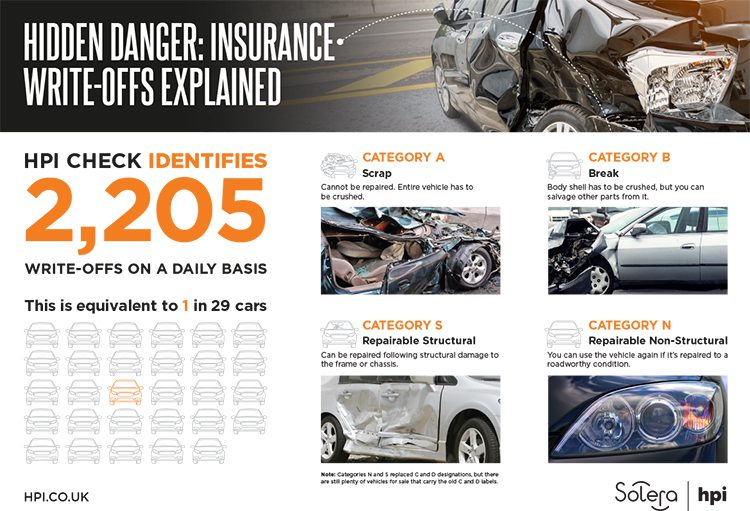
When choosing a pre-owned vehicle to purchase, how do you really know what you’re getting yourself into — both literally and figuratively? What you don’t know may hurt you when it comes to a vehicle’s hidden past, most notably when it comes to write-offs. Cars get written off by insurers because they’re either so damaged they’re not safe to drive or will cost more to fix than what they’re worth. Either way, a write-off is something you typically want to avoid. On a daily basis, HPI Car Check data identifies 2,205 cars as insurance write-offs just as those vehicles are presumably being considered for purchase. Unwittingly buying an insurance write-off can have serious safety and financial implications, beyond just paying an artificially inflated cost. That’s why it’s important to understand how the system works. When an insurance claim is filed on a car after an accident, fire damage or theft, it’s assessed by the insurance company to determine whether it’s worth repairing. Car insurance assessors follow a Salvage Code produced and supported by the Association of British Insurers and designed to protect the public, detect and deter insurance fraud and other criminal activities and to make vehicle histories more transparent. In October 2017, new insurance write-offs came into effect to reflect the rising complexities involved in repairing today’s vehicles. Categories N and S replaced C and D designations, but there are still plenty of vehicles for sale that carry the old C and D labels. Today, buyers considering vehicles that have been damaged will get a better sense of the impact, plus the V5C is now marked with an S to denote a salvaged vehicle. The code requires all salvaged vehicles to be categorized as listed below. Write-off Categories A – Scrap Unsuitable or beyond repair and has been identified to be crushed in its entirety, including otherwise salvageable parts. These are cars that have been damaged so badly, they’re not safe to be put back on the road. They must be completely destroyed. B – Break Unsuitable or beyond repair. The body shell has to be crushed, but other parts can be recycled/resold, such as wheels and seats — even the engine. S – Repairable Structural Can be repaired following structural damage to the frame or chassis. The vehicle can be used again if it’s repaired to a roadworthy condition. Cars in this category must be re-registered with the DVLA before becoming road-worthy again. N – Repairable Non-Structural Can be repaired following nonstructural damage, so the problem could possibly be cosmetic, or electrical (e.g., lights, heated seats or an entertainment system) and too costly to repair. However, there may still be some safety critical items that require replacement such as steering and suspension parts. Insurance companies can sell write-offs in the S and N categories back to the original owner or to a third party through a vehicle salvage company. It’s the responsibility of the keeper to notify DVLA when a Category S vehicle is passed to an insurer following a total loss payment, but no notifications are made when a Category N car is written off. C Can be repaired, but it would cost more than the vehicle’s worth. The vehicle can be used again if it’s repaired to a roadworthy condition. D Can be repaired and would cost less than the vehicle’s worth, but other costs (such as transporting your vehicle) take it over the vehicle’s value. The vehicle can be used again if it’s repaired to a roadworthy condition. Cars in these categories can sometimes be a bargain. An older car can occasionally be safely repaired at a lower standard than dictated by an insurance company using less expensive labor or used parts. But, buyer beware. Know that insurance can be harder to come by for cars that have been written-off, and some insurers refuse to cover them at all. For categories C, D, S and N, expect higher premiums and a lower resale value when you’re ready to sell. At any rate, it’s worth getting a thorough mechanical inspection from a qualified mechanic before buying a car because, unfortunately for the typical buyer, it can be difficult to distinguish a write-off on sight. And, as for the seller, well he may or may not be knowingly exploiting his customers. Although some sellers may attempt to disguise Category N or S vehicles as undamaged by hiding their past. One way to know what you’re getting yourself into is to use an HPI Car Check to scrutinise the history of any motorised vehicle registered in the UK, including cars, vans and motorbikes. The comprehensive check alerts you to any troubling information held against the vehicle by finance and insurance companies, the DVLA, police and other industry bodies. While an HPI Car Check can alert you to an insurance write-off if the insurance company has declared it a total loss or the DVLA has marked it as scrapped, there are a lot of other red flags you’ll want to be aware of. As a matter of fact, one in three vehicles has a hidden issue. It could be that the car has been stolen or has a stolen V5C, has outstanding debt attached to it, has been clocked to display reduced mileage, has had its number plates changed to hide its history … the list goes on. So be sure to protect yourself with good quality, trusted data from a reliable source. For more information about the HPI Check and how you can protect yourself when buying a used car, visit www.hpi.co.uk
The HPI Check Electric Vehicle Study

Electric vehicles (EVs) are getting more and more popular around the world. And it’s easy to see why. They provide a greener and more efficient alternative to some of the vehicles currently dominating our roads. But not everyone is convinced by them, with many drivers giving electric cars a wide swerve when it comes to choosing their next vehicle. With all of this in mind, we decided to dig deeper into the thoughts and opinions of drivers in Britain and beyond. Our focus was on the reasons why people would or wouldn’t make the move to electric. We also looked at how some commonly held negative opinions are in fact misconceptions, and how these are keeping electric vehicles from becoming the car of choice. Overall Survey Results Combining the British and international results, we found that 83% of respondents said they would consider purchasing an electric vehicle. This is a sizeable majority, but still leaves almost one fifth of drivers (17%) who wouldn’t want to go electric. In terms of gender, men are more open to purchasing electric vehicles, with 87% welcoming the idea. This can be compared with a lower proportion of women, at 78%, who would consider an electric car. When it comes to age groups, our survey found that millennials are the most open to EVs, with 91% of the 25-34 demographic saying that they would consider them. The 55-64 group, on the other hand, responded positively only 32% of the time. Results by City The UK city where people are most likely to adopt electric cars is Edinburgh, with a 94% positive response rate. This is closely followed by Sheffield, Manchester, Bristol and London. Interestingly, these are all prominent university cities, perhaps suggesting a link between high levels of education and a willingness to adopt new ideas. With only 23% of respondents saying that they would turn to an EV, Nottingham was the UK city least likely to adopt this form of transportation. Residents of Norwich, Liverpool, Cardiff and Newcastle were also unlikely to choose electric vehicles. Results Internationally Around the world, we found that respondents in Mexico were the most open, at 93%, to the idea of electric cars. Brazil was also highly positive, with 90% of respondents there saying that they would embrace EVs. At the other end of the scale, only 25% of Hong Kong’s respondents were positive about adopting these types of vehicles. Russia, Singapore and France also received very low scores. These are the full international results, showing the percentage of those who would choose to drive an electric car: Mexico – 93% Brazil – 90% India – 87% Spain – 82% Germany – 76% Italy – 75% Turkey – 71% Canada – 67% Indonesia – 60% Australia – 58% South Korea – 57% The Netherlands – 55% France – 50% The USA – 47% Singapore – 44% Japan – 40% Russia – 40% Hong Kong – 25% Interestingly, it is the older generation in countries other than the UK who are more willing to buy electric cars than the younger generation. This can be seen in results such as the 100% positive response rate from those in Australia’s 45-54 age range and the 73% rate from those in Canada’s 45-54 range. Why People Aren’t Going Electric in the UK In our survey we tackled the question of why people wouldn’t buy an electric vehicle. In the UK, the results showed that respondents are most worried about a perceived lack of charging points. However, this is a common misconception, as most electric cars can be charged from any mains outlet. Price is also a major concern, which is understandable when considering the cost of a new EV. But it should be noted that the cost of running an electric vehicle is generally very low compared to other forms of motorised transport. So, this is perhaps another misconception. When it comes to running out of charge and taking too long to recharge, we have found further misconceptions. Some electric cars can take as little as half an hour to recharge completely and have highly accurate gauges that tell drivers when they are low on charge. While electric cars in some instances may have lower ranges than combustion vehicles, they are so easy to charge that longer journeys can be undertaken with confidence. So, the final top reason that UK drivers would go electric – low range – is perhaps yet another misconception to add to the list. Battery Misconceptions When it came to the subject of servicing, 61% of all respondents believed that the batteries of an electric vehicle needed to be changed within the first two years. Many respondents (34%) even believed that it was necessary to change the battery within the first year. Both these beliefs are flat-out misconceptions. However, it is of interest to note that so many people hold them – even those who would choose to buy an electric car. Chris Plumb, Black Book Editor of HPI Check, commented, ‘It’s surprising how many people think batteries needs replacing so early in their life when there is no real evidence of this. In fact, batteries seem to be outperforming the industry’s expectations.’ Reasons from International Respondents Globally, the reasons why people wouldn’t adopt electric cars closely followed the responses from the UK, except there was also a concern about safety. This should be seen as a misconception, because electric cars have to pass the same safety standards as any other types of vehicles. Some international respondents cited performance issues as being a reason not to adopt an electric car. While combustion vehicles may have the edge in terms of outright performance, when it comes to driving within the speed limit, there is very little difference between the two types of vehicles. So, this could be yet another misconception. Comments from Respondents Many of the remarks made by respondents expressed the fallacies mentioned above. ‘Not many places to charge up,’ and, ‘charging problems,’ were just two comments which
What is an HPI Check?

The chances are that ever since you bought your first used car, you’ve read that you should invest in a pre-purchase HPI Check. And so you should. We might be a bit biased when it comes to offering such advice, but there are sound reasons why we have faith in our product; we can give you complete peace of mind. Not convinced? Then let us show you why our assertion isn’t just hot air. HPI has been providing vehicle history checks since 1938 – almost eight decades ago. Back then, if you wanted to buy a second-hand Austin Seven or Ford Model A, HPI was there to make sure you weren’t stitched up. At first an HPI Check could tell you only if that Wolseley or Riley you were thinking of buying was subject to outstanding finance, but by 1947 we could also tell you if the car was stolen; by the 1980s we’d also disclose if the car had been crashed. Since then we’ve added a mountain of additional information to the HPI Check, so you get the most comprehensive possible picture of that potential purchase, before you commit to buying it. Just some of the key information an HPI Check will give you includes: