

Keep Your Car Roadworthy with HPI: Essential Vehicle Safety Tips

As February draws to a close, it’s the perfect time to reassess your driving habits and ensure your vehicle is in safe, reliable condition for the year ahead. Keep Your Car Roadworthy with HPI by prioritising vehicle safety. HPI, the UK’s leading provider of vehicle history checks, urges motorists to recognise the hidden risks in their vehicles—whether it’s a stolen car, inaccurate mileage, or a history of past accidents. Key Risks in Your Car’s History With over 250 cars flagged daily for security concerns, and 1 in every 28 cars on the HPI register listed as written off, it’s crucial to verify your car’s history. In 2024, more than 50,000 cars were reported stolen, and over 662,297 vehicles had altered mileage readings. Keep Your Car Roadworthy with HPI by regularly checking your vehicle’s background to avoid these hidden risks. 1. Prioritise Regular Vehicle Maintenance Routine maintenance checks are key to keeping your car roadworthy with HPI. Neglecting tasks like checking tyre pressure, oil levels, and brakes can lead to mechanical failures and accidents. A proactive maintenance approach not only preserves your car’s value but also keeps it safe and reliable on the road. 2. Keep Software Updated to Enhance Security As vehicle technology evolves, staying on top of software updates is crucial to keeping your car roadworthy with HPI. For example, keyless entry systems are vulnerable to car theft when criminals intercept key codes. Stay informed about recalls or software updates that address these security concerns, ensuring your vehicle is always protected. 3. Verify Your Vehicle’s Mileage Over 1,800 cars daily are flagged by HPI for having tampered odometers. Whether you’re buying a used car or verifying your current vehicle’s mileage, it’s essential to keep your car roadworthy with HPI by ensuring accurate mileage readings. Odometer fraud can compromise the safety and value of a vehicle. 4. Protect Against Vehicle Cloning Vehicle cloning, where criminals alter a car’s identity, is on the rise. To keep your car roadworthy with HPI, always check your car’s identity using an HPI Check to ensure it hasn’t been cloned. Cloning can lead to serious legal issues if you unknowingly purchase a stolen car. 5. Avoid Used Car Scams Buying a used car requires diligence to avoid scams. Use HPI to keep your car roadworthy with HPI by identifying risks like insurance write-offs, outstanding finance, or stolen vehicles. An HPI Check is essential for making an informed and safe purchase. 6. Know Your Vehicle’s Full History Whether you’ve owned your car for years or are purchasing a new one, knowing its full history helps you avoid costly surprises. An HPI Check provides an extensive report sourced from the DVLA, police, and insurance companies, revealing any hidden issues that could affect your car’s value and safety. To keep your car roadworthy with HPI, always know your vehicle’s full history. 7. Drive Economically for Safety and Savings Driving economically not only helps you save on fuel but also improves vehicle safety. Smooth driving, maintaining a steady speed, and avoiding sudden braking help reduce wear and tear on your car. These habits can help keep your car roadworthy with HPI by minimising unnecessary repairs and ensuring long-term reliability. Insight from Matt Freeman at HPI Matt Freeman, managing consultant at HPI, shares: “HPI’s vehicle history checks help motorists identify potential risks such as mileage discrepancies, written-off cars, and stolen vehicles. By regularly checking your car’s background, you ensure safer driving and avoid unnecessary financial surprises.” HPI has been a trusted provider of vehicle history checks since 1938, offering the most comprehensive service to verify a car’s past. Whether you’re buying a new car or simply checking your own, an HPI Check is your best defense against fraud. Protect Your Car with HPI As we wrap up February, make sure your vehicle is ready for the year ahead. Keep your car roadworthy with HPI by ensuring your car’s history is clear of any issues. HPI’s vehicle checks provide essential information to keep you safe on the road, from identifying stolen cars to flagging mileage discrepancies. Protect your investment, ensure your car’s safety, and drive with confidence. For more information or to run a vehicle check today, visit HPI.co.uk.
The importance of a service history
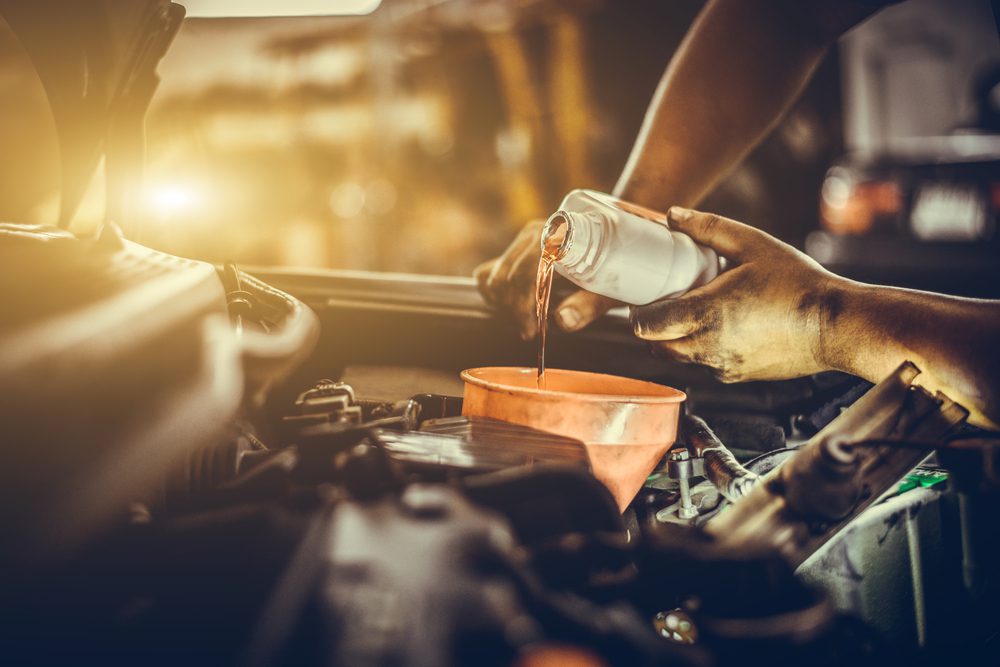
HPI recently carried out a survey of 2034 drivers, to quiz them about how important a service history is to them when they’re buying a used car. Unsurprisingly, the majority of those asked said that they would feel reassured by the presence of a pile of paperwork to provide evidence of regular maintenance – and they would be prepared to pay a premium for a car that came with a decent maintenance record. Just one in five of those surveyed said that the lack of a service history would make no difference in their purchasing decision. The remaining 82 percent would either walk away or would expect a significant discount on the purchase price – as much as 20 percent! But just how important is a service history when buying a used car? What is a service history? Let’s start by defining what makes a full service history. Is it merely evidence that all routine servicing has been carried out according to the manufacturer’s schedule? That’s a good start, because if not even this basic level of servicing has been performed, there’s little chance of any preventative maintenance having been carried out. But cars need more than just routine servicing – potentially a lot more as the miles notch up. If you’re buying a high-mileage car, the chances are that it will have had items such as brake discs and pads, shock absorbers, suspension bushes and perhaps the clutch, exhaust or radiator replaced. These repairs will generally fall outside the manufacturer’s servicing schedule because when these parts need to be replaced, it likely won’t be according to mileage or length of time. How and where the car is driven, and whether or not it has been garaged will be more important. So, a service history is not just a record of the routine maintenance that’s been undertaken, such as an annual oil and filter change. It is proof that items such as the battery, tyres, various light bulbs, and potentially the timing belt if the engine has one fitted, have been replaced. Further, it reinforces that the car has been well kept, and the record of replacement timing reassures a buyer that it is unlikely the car will need service in the immediate future. However, if you buy a car that comes with an invoice for every penny that has been spent, it is worth reviewing the documentation to ensure all is what it seems. Most cars have a schedule that alternates between minor and major services, though some cars have an intermediate service between these two. The manufacturer will have laid out what has to be replaced in each of these services in the owner’s manual and this is easily checked; over and above these parts there may be others that need to be renewed. It is not unknown for owners to skimp on their car’s maintenance if they are aiming to sell the car on, so confirm not only that car maintenance has taken place, but also that it has been maintained according to the manufacturer’s schedule. Likewise, confirm that the car has had a major service when it is due, and not just a minor; the former usually entails replacing significantly more parts and, as a result, it is correspondingly more expensive. It may sound like a lot of extra caution and work to go through ahead of buying but only you can decide whether you would rather just take a chance and hope that the car will be a sound purchase. Franchised or independent? Where a car is serviced can also make a difference to its value at resale time. Modern cars are very complicated and require specialist equipment and knowledge for accurate maintenance. While many routine servicing jobs such as renewing fluids and replacing filters or fitting new brake discs and pads can be carried out by any competent mechanic, several other repair types are not as straightforward. An increasing number of replacement parts have to be programmed into the car to work properly, and that takes specialist diagnostic equipment. By law, that equipment has to be made available to independent garages but as the cost is often prohibitive, many are unable to invest in it. Indeed, this equipment can be so costly that only marque specialists can justify the expense – a garage that works on multiple car types can’t invest in the necessary kits for dozens of brands. While a general garage can be a good bet for routine maintenance, when something that is more specific to car type and model, it should probably be performed by someone who specialises in the marquee service. If you’re buying an Audi, Porsche or Jaguar, for example, a garage that focuses exclusively on these car types will provide reassurance. Even if a car is still within warranty it doesn’t have to be maintained by a franchised dealer, but to ensure the warranty is not voided the service schedule must be adhered to and original-quality parts must be fitted. Just bear in mind that once a car is outside warranty, if something goes wrong its manufacturer is much more likely to contribute to the repair costs if the car has stayed within the official dealer network for all maintenance. Staying within the official network has another benefit, too: in most cases all maintenance will be logged on the manufacturer’s computer network so the service history can be retrieved at any point by any dealer. When you consider that it is not hard to forge a service book or to get a replacement, an official online record of all car maintenance can provide great reassurance to the next owner. Conclusion There are two key things to focus on when buying a used car, in terms of its service history. The first is whether or not the car has been properly maintained and the other is what the car is worth; its value will be related to how much proof of expenditure has been completed. Ask 50 different